
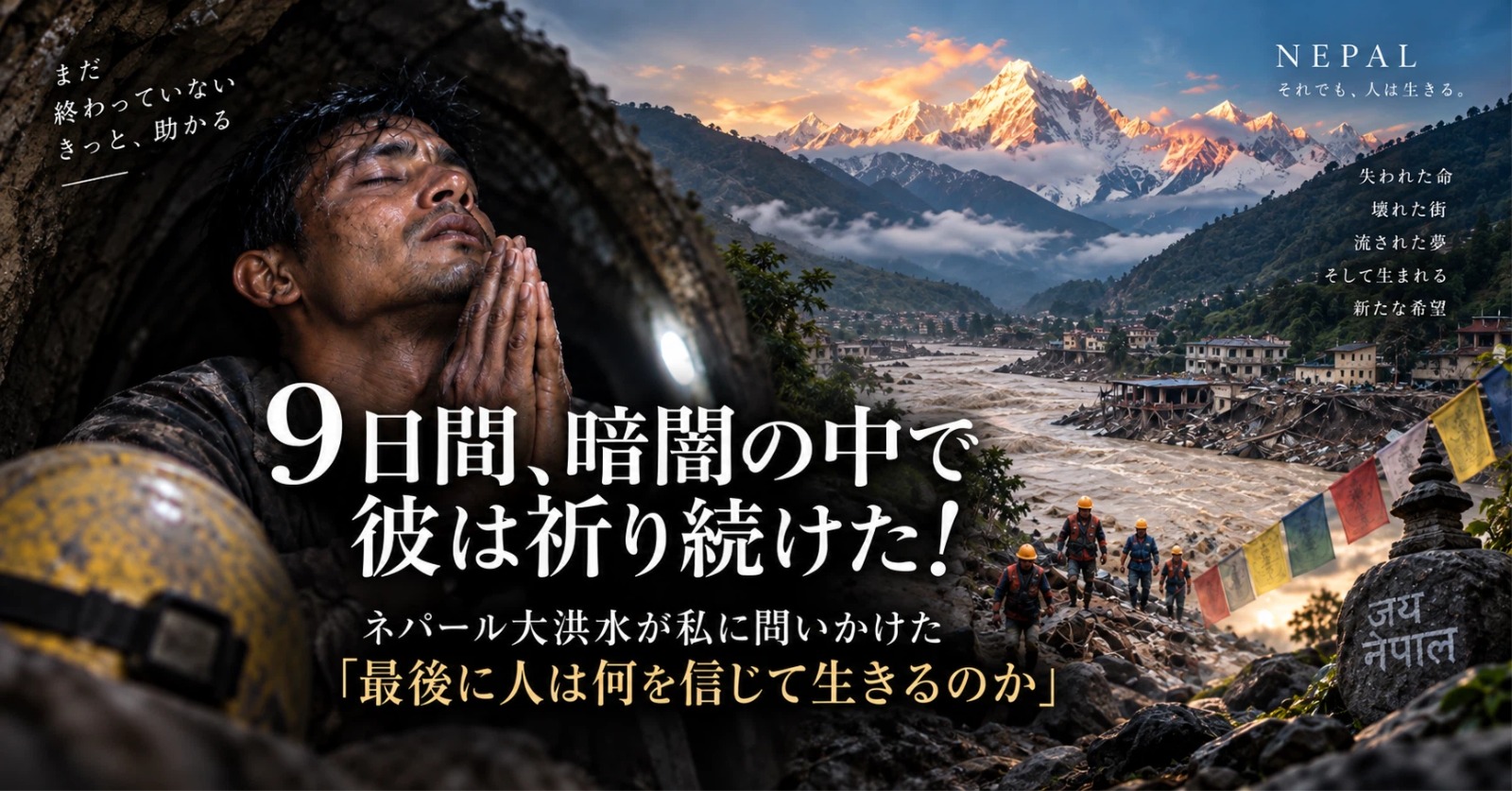
1,385 bodies recovered, 5,130 still missing. Estimated damages of 276 billion yen. Yet, one man continued to believe in the darkness that "it's not over yet."
If I were, What if you were trapped in a tunnel with absolutely no light? I don't have a smartphone. There is no food. I don't even know what's happening outside. I can't even tell if it's day or night. I don't even know if help will actually come. What would you think if that situation continued for a day, two days, or three days? On August 26, 2026, Nepal was struck by massive floods and mudslides. In the underground facilities of the Upper Trishuli 3A hydroelectric power plant, which was damaged by the attack, 30-year-old mechanical manager Sanjay Sah survived for nine days. Then, on September 4th, he was rescued alive by a rescue team. I was speechless for a while after reading this news. Because, regarding this disaster, "How many people died?" "How many people are missing?" "How much was the damage?" I was so focused on chasing after big numbers, What is the power that drives a person to live? Because I was confronted with a completely different question.
"I didn't know how many days had passed."
When Shah learned that a mudslide was approaching, he didn't just flee himself, but warned the workers around him to evacuate. They say that there were about 40 to 45 people in a place that normally only has a few. He later, I was in charge of the control room. Therefore, I had a responsibility to protect everyone's lives. When a major accident occurred, I couldn't just run away by myself. He is saying something to that effect. As a result, by trying to help others escape, I lost time to escape myself and was trapped underground. It's been 9 days since then. There was no food. According to a later interview with Reuters, he survived by drinking floodwaters and water seeping from the rocks in the mountains. He also said that he kept his eyes closed for a long time in the darkness, fearing that something might hit him in the eye. I can't tell the difference between day and night. I don't even know how to tell time. I don't even know what month or day it is. Even when he was rescued, he said, I thought only two or three days had passed. He reflects on it. in fact, 9 days. It's over 200 hours of darkness.
What he kept repeating in the darkness
So, for those nine days, What was he doing? Mr. Shah, I was praying. Many times. Many times. In an interview with Reuters, he said he repeatedly chanted the Krishna mantra. Today, September 13th, on TV Asahi in Japan,
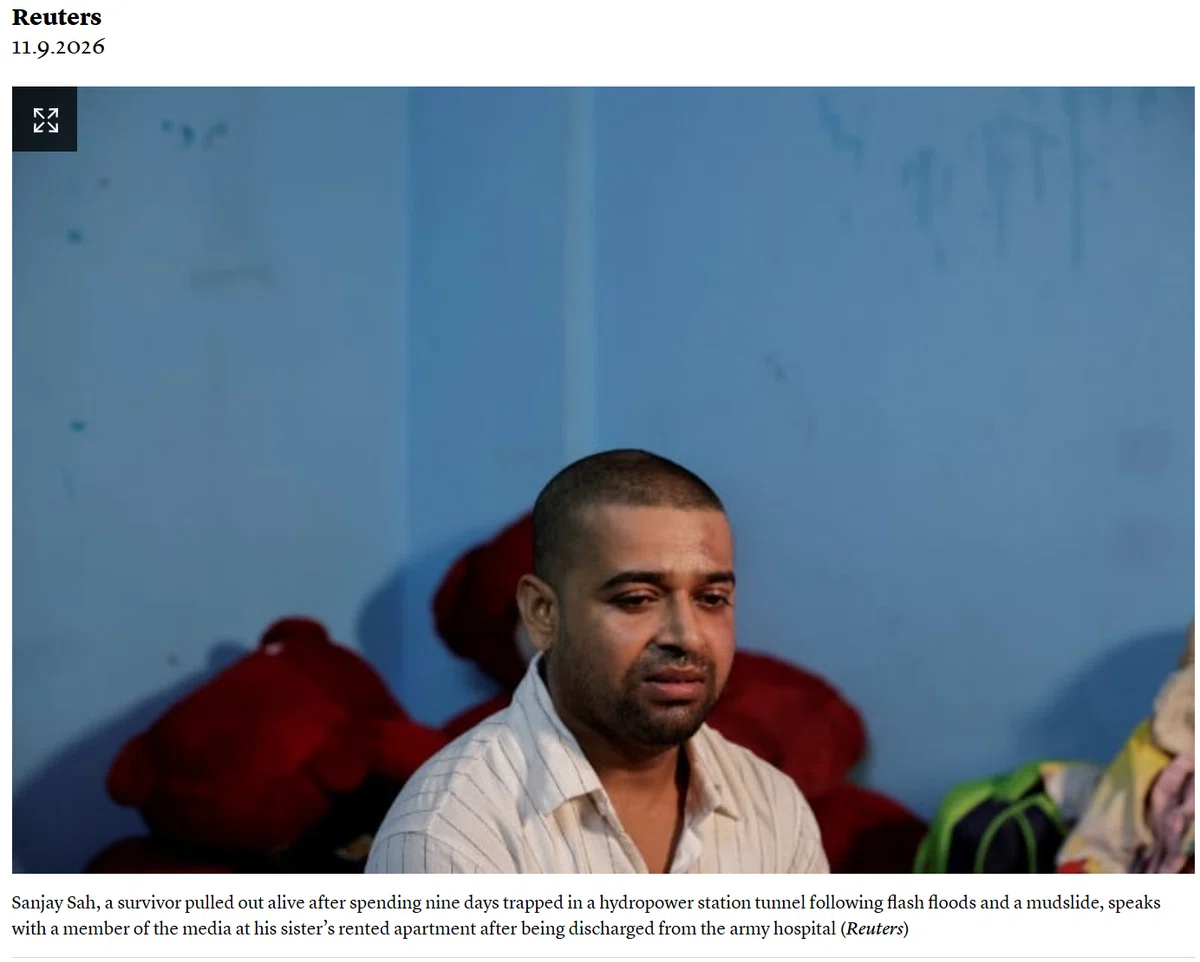
"I recited prayers many times." His testimony was then presented. However, what moved me even more were the words he spoke before and after that. he, "Even if I hadn't been rescued, I had to believe in myself." That's the gist of what I'm saying. I thought about my family. I thought my family must be worried about me. and, "Why give up so easily?" With that feeling, I continued to give myself the courage to live.
When people are truly in trouble, what do they turn to?
I've been thinking about this ever since I read it. When humans are truly desperate, What will we ultimately rely on? Is it money? Is it about status? Perhaps it's about educational background? Is it a company? Is it a smartphone? Is it AI? Of course, none of them may be of any use during nine days in darkness. So, Is it ultimately God who prevails? I don't have the answer. Since this is also a religious issue, I don't intend to offer a single answer. However, after listening to Mr. Shah's story, I thought this: Perhaps, In extreme situations, "believing in God" and "believing in oneself" may not be so far apart. Prayer is to God who is outside, "Please help me." It's not just about making a request, In my own heart, "Don't give up yet." "It's not over yet." "Live the next hour." It might also be an act of repeatedly saying that.
It's not as simple as saying, "If you stay positive, you'll be saved."
I don't want you to misunderstand this point. "If you think positively, you can survive the disaster." It's not that simple. The reason Mr. Shah survived was, We were able to secure a water supply. Being in a relatively habitable environment. The rescue team never gave up. The Nepalese army, along with many engineers and specialists, continued to dig through the mud and rock. And there were probably countless coincidences as well. On the other hand, many people lost their lives while trying to live in the same way. Therefore, we can never think that those who survived were "successful because they were strong," or that those who died "did not survive because they gave up." Even so, I There is meaning in the act of "not giving up hope." I think so. This doesn't mean performing miracles. I will try to live the next hour. Drink water. Stay in a safe place and do not move unnecessarily. Listen to the sound. Waiting for signs of the rescue team. Protect your own physical strength. In order to continue each of those actions, "I can still live." Perhaps it was necessary to think that way. What will support you to the very end in the most extreme situations. Surprisingly, Perhaps it's the power to believe in yourself.
However, behind one miracle lies immense sorrow. Shah's rescue is a great source of hope.
However, we cannot simply look at that and turn this disaster into a heartwarming story.
As of the morning of September 13, 2026, the latest nationwide figures from the Nepalese government that I was able to confirm were those released on September 11. 13,676 people were rescued. Approximately 5,130 people are missing. and, 1,385 bodies have been recovered. The missing persons include approximately 600 foreigners from about 35 countries. 5,130 people. It's easy to write it as a number. but, 5,130 families, "Maybe he'll come back." When you consider that they are still waiting, the meaning changes completely. It wasn't just lives and homes that were swept away by the mudslide. Dreams were swept away with them too. Regarding this disaster, I have seen the figures "1,385 people," "5,130 people," and "276 billion yen in damages" many times. However, for me, working on the ground at the Hayabusa Japanese Language School, this disaster is not just about numbers. In fact, the older brother of one of the students studying Japanese at Hayabusa Japanese Language School is still missing.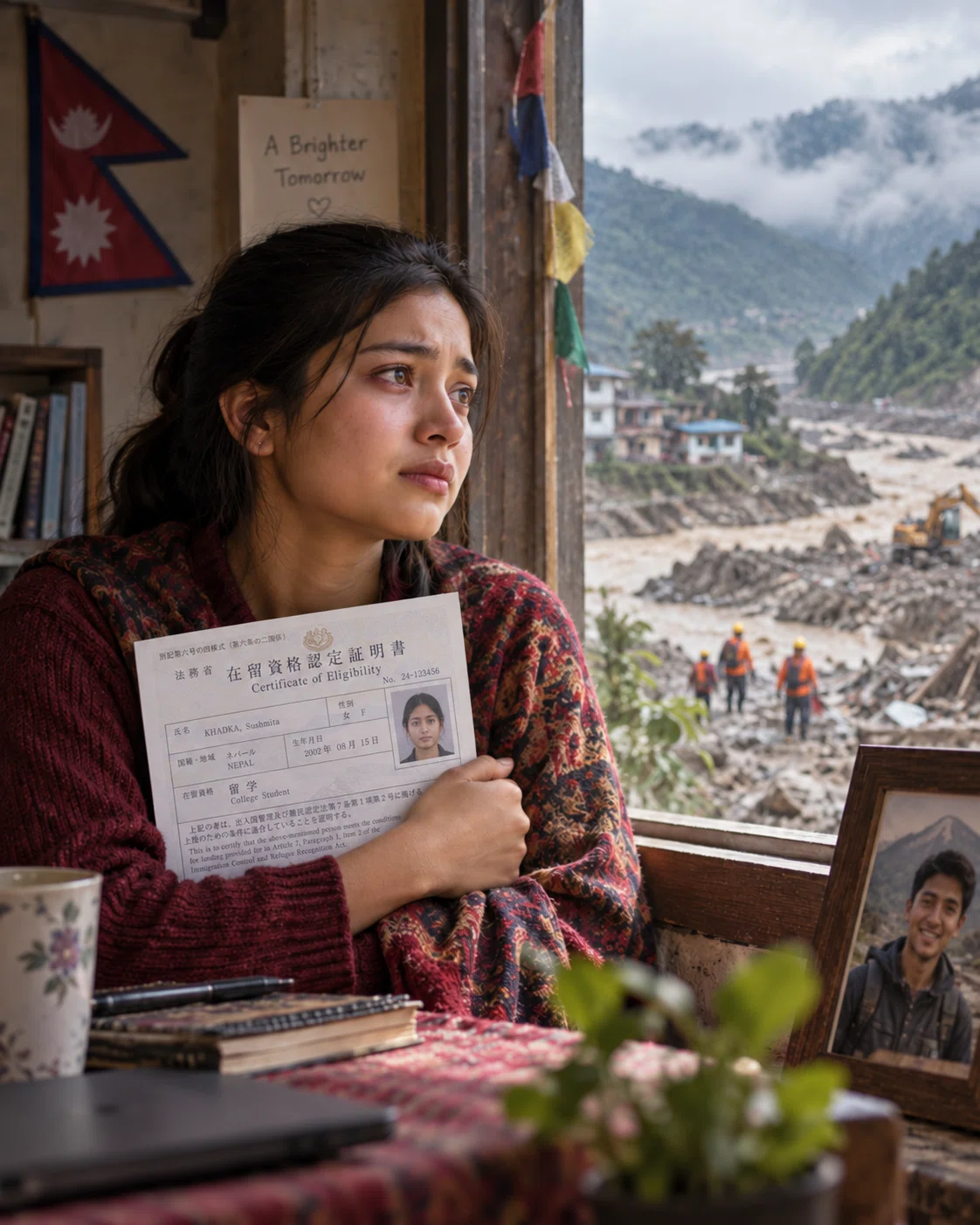
She had decided to study abroad at a Japanese language school in Chiba Prefecture, Japan, starting in October 2026. This was just about two weeks before the mudslide occurred. I received a Certificate of Eligibility (COE) from Japan. This student had studied Japanese for a long time, prepared documents, and gone through school interviews, all with the goal of studying in Japan. Finally, they were ready to go to Japan. When the COE arrived, we were truly delighted. "Congratulations! You're finally going to Japan!" I called out to him. I'm sure both the person themselves and their family felt a great sense of hope. In a few weeks, I'll get my visa, book my plane tickets, and start my new life in Japan in October. All the effort I've put in up until now is finally taking shape. We thought so too. However, about two weeks later... Everything has changed. Her older brother was in the Nepalese military and worked at a hydroelectric power plant. Caught in this mudslide, His whereabouts are still unknown. The family is still waiting for their brother to come back. "Perhaps they are still alive somewhere." "Perhaps we can still find more." Families spend each day caught between such hopes and anxieties. In that situation, she made a decision. I've given up on studying in Japan. That's the decision. It's not because I can't go to Japan. The COE has already been issued. We've been preparing for this for a long time. I was in a position where I could go to Japan if I wanted to. but, While my family is in such a difficult situation, "Is it really okay for me to go to Japan to pursue my dreams alone?" I think that's what they were thinking. My family is in turmoil. My brother is missing. My parents are suffering too. In the midst of all that, I was the only one who boarded the plane. "I'm going to Japan to study abroad." I cannot say that. Considering her feelings, I simply thought, "Since you've already won the COE (Center of Excellence) award, you should go to Japan." That's not true. vice versa, "You should give up studying abroad for the sake of your family." That's not necessarily true. Whichever you choose, It's probably because it's a very difficult decision for the person making it.
I started thinking while watching COE.
For those of us in the study abroad industry, the Certificate of Excellence (COE) is an extremely important document. Students spend months preparing, Japanese schools will check the documents. Apply to immigration, Waiting for the review, It will finally be issued. Once the COE arrives, "All that's left is to go to Japan." Many students think so. We agree. Even when I said "Congratulations" to her, I never imagined that something like this would happen just two weeks later. Life is, Things can really change in an instant. Until yesterday, "What should I study in Japan?" "Where should I work part-time?" "What kind of life should I live in Japan?" The young man who was saying this said, suddenly, "Where could my brother be?" "How can I support my family?" "Should I really be going to Japan?" We have to consider that possibility. We are both students. However, due to just one disaster, The things we need to consider have completely changed.
The mudslide took more than just lives.
Regarding this disaster, Many people died. Many people went missing. My house was swept away. The bridge collapsed. The road is damaged. A hydroelectric power plant was damaged. Enormous economic losses were incurred throughout the country. That alone is more than enough to constitute a major disaster. However, what I've noticed on the ground this time is, Disasters destroy more than just what is visible. That's the point. The future that one young person has envisioned over many years. A dream that the whole family has supported together. A life lived with the expectation of "this is what will happen next year." Even that, It changes in an instant. As I watched this disaster, "It wasn't just houses, roads, and cars that were swept away by the mudslide. The dreams of many people were also carried away with them." That's how I feel.
But I don't want to think that even my dreams have been completely swept away.
She has decided to give up on studying in Japan this time. At the very least, my planned study abroad program in October is now unlikely. However, I "My dream of studying in Japan is over." I don't want to think that. I'm with my family now. I'm waiting for my brother now. Right now, I'm supporting my family. I think that's the most important time for her. It might be six months from now. It might be a year from now. We might need more time. nevertheless, He himself once again, "I want to go to Japan." When the day comes that I can think that way, We want to recreate that dream together once again. Education is, It's not just about sending them to Japan as planned. Waiting for someone who has stopped moving forward. For those who have almost given up on their dreams due to circumstances in life, "It's not over yet." That can be said. And when I started walking again, Being by their side. Isn't that also part of the role of those involved in education?
Beyond the number "1,385," there are these kinds of lives.
According to the news, 1,385 bodies recovered. 5,130 people are missing. The estimated damage is 276 billion yen. These figures are reported. Of course, it's important to provide accurate figures. but, Beyond the missing person, I have parents. I have siblings. They may have children. I have a friend. I have colleagues at work. And like her in this case, There are families who, while waiting for that person to return, are essentially putting their own lives on hold. that's why, "5,130 people are missing." That is, This is not just a problem for 5,130 people. This means that the lives, work, education, and futures of many times that number of families are still at a standstill. This, I believe, is the true extent of the damage that cannot be seen solely through disaster statistics.
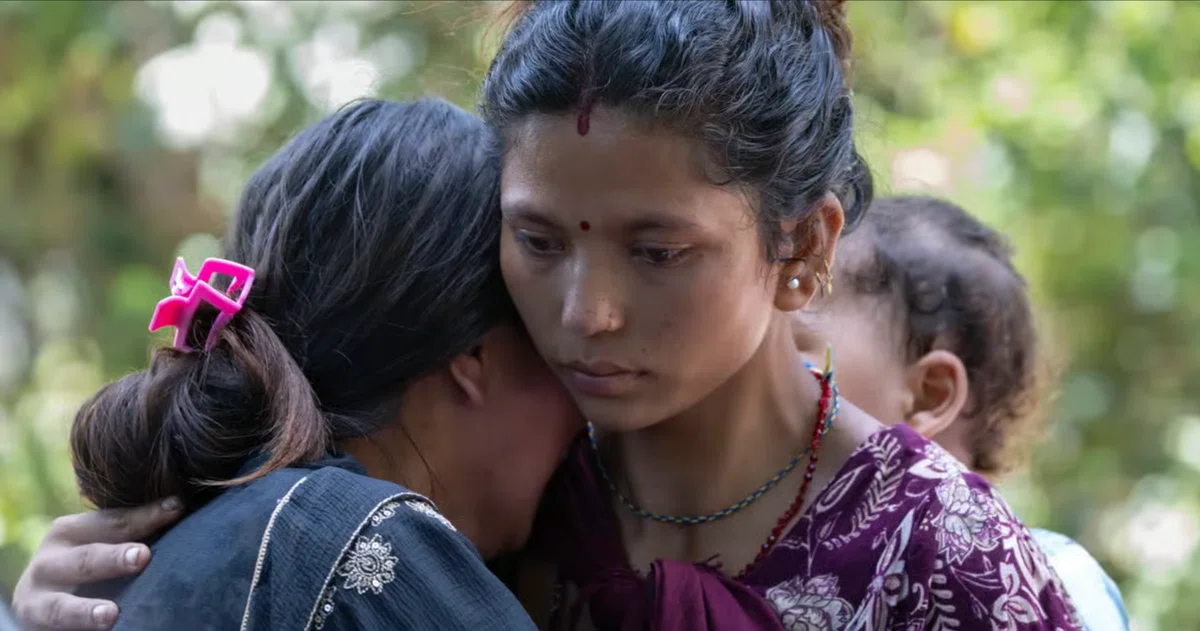
The figure of "276 billion yen" reported by the Nikkei Shimbun.
On September 12, the Nikkei also published an article distributed by Kyodo News, "Nepal mudslide damages 276 billion yen, 12% of the annual budget; impact on tourism widening." That was reported. According to the Nepalese government's Rapid Damage and Needs Assessment, the direct damage from this incident is estimated at approximately $1.8 billion , and the economic losses at approximately $883 million. And the amount of money that is estimated to be needed for recovery and reconstruction from now on is, Approximately $4.78 billion. Of that, approximately $4.71 billion is needed for long-term reconstruction alone. (Ministry of Foreign Affairs) Kyodo News reported that $1.8 billion is equivalent to approximately 276 billion yen, which is about 12% of Nepal's annual budget. Looking at the numbers in the context of Japan's size might give you a different impression. but, A single disaster resulted in the loss of assets equivalent to more than 10% of the national annual budget. Try thinking about it that way. This is not just a problem for the disaster-stricken areas. This is a national issue for Nepal.
A "second disaster": tourists will stop coming.
Furthermore, what I'm worried about is tourism. Nepal is projected to welcome approximately 1.16 million foreign tourists by 2025. Tourism is not simply an industry for hotels. guide. Porter. Driver. restaurant. Airlines. A lodge in a mountainous area. Souvenir shop. Farmer. The spending of a single tourist contributes to the livelihoods of many families. According to a Kyodo News article, an official at a tourist information center in Kathmandu said that nearly half of the foreign tourists who had planned to travel in September have canceled their trips. This statistic does not represent the cancellation rate for all of Nepal, but it does show the magnitude of the anxiety being experienced on the ground. but, "The whole of Nepal is not dangerous" The Nepal Tourism Board itself also "NEPAL IS NOT CLOSED" This message is being sent to the world. It is naturally necessary to avoid areas where damage is concentrated and to check safety information. However, if even areas that are safe to travel to are all avoided, This time it's not the flood itself, The second disaster: "No tourists are coming." This causes many families to lose their livelihoods. To the people of Japan, Instead of judging "all of Nepal is dangerous" based solely on scary images, Please check which areas are dangerous and which are operating normally to make your own judgment. As someone working on the ground, that's what I hope for.
This disaster was not simply a matter of "heavy rain."
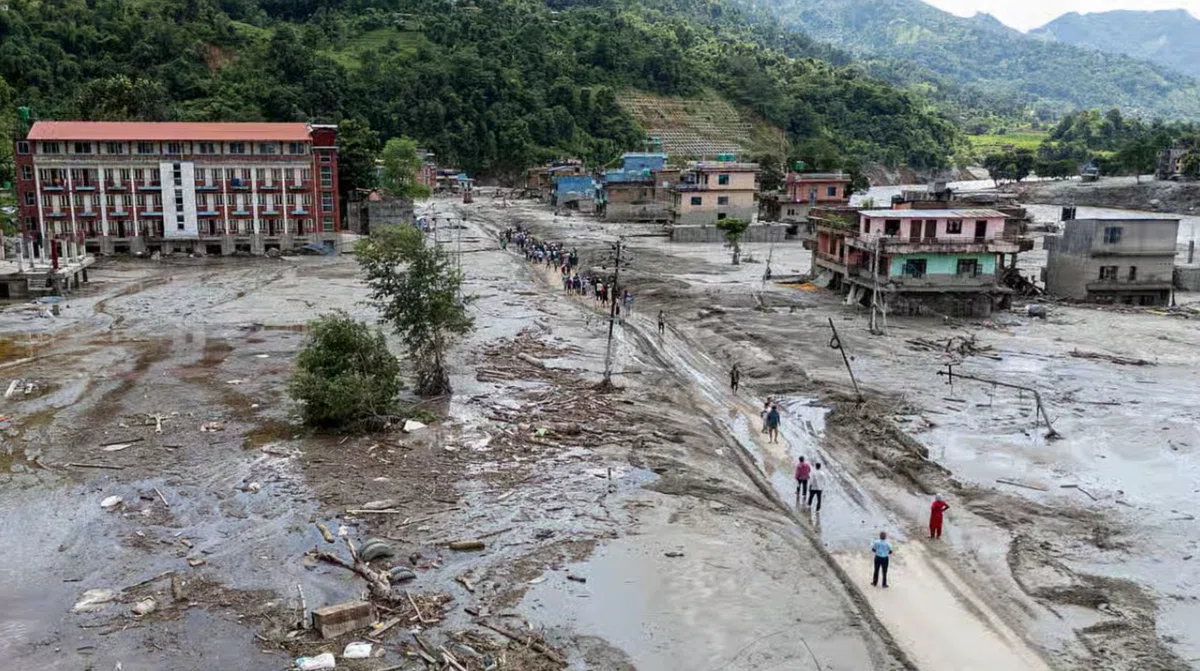
Scientific investigations have also progressed. An article published in the journal 'npj Natural Hazards' on September 12th states that a massive rock and ice collapse occurred in the Langtang Lirung massif in Nepal at around 8:37 a.m. on August 26th, causing rocks and ice to fall into the valley floor, transforming into a huge debris flow and flood, carrying soil and water with it. The current maintained high energy for over 20 km, and the subsequent flood and sediment effects are believed to have extended approximately 100 km downstream. ICIMOD observations show that at Galchhi on the Trishli River, The water level rose by up to 9 meters in just about 30 minutes. I did. 9 meters. It's about the same height as a three-story building. And it only takes 30 minutes. This is, "The flood is coming, let's get out of here now." That's too late.
We need to calmly consider whether climate change is the cause.
In this article, I will "This flood was caused by global warming." I wouldn't write that. Recent scientific papers also advise caution in concluding that this particular collapse is directly caused by climate change. On the other hand, as global warming progresses, The shape of the glacier is changing. Permafrost deteriorates. The cracks in the bedrock are changing. The amount of meltwater increases. It has been pointed out that these factors could potentially change the "background conditions" for mountain disasters in the Himalayas. In other words, "Global warming caused a landslide at 8:37 a.m. on August 26th." I wouldn't go so far as to say that. but, The environmental conditions of the Himalayas are beginning to change from what we knew before. I think we have to confront that issue.
My biggest concern is what will happen to the children "afterward."
The Hayabusa Nepal Group interacts with many young people and families every day through education, human resources, and opportunities to study in Japan. Therefore, I When you look at the numbers for roads and bridges, "How many children will be unable to go to school because of this disaster?" That's what I can't help but think. According to UNICEF's latest report from September 8, the floods have left approximately 84,270 people in need of humanitarian assistance, 32,021 of whom are children. 23 schools were damaged. The learning of approximately 14,000 children has already been interrupted. Looking at the bigger picture, approximately 30,000 people need educational support. Furthermore, 541 children have been identified as being separated from their guardians , and it is estimated that at least 17,000 children require psychological and mental health support. Looking at these numbers, I don't think that "rebuilding the school building will solve everything." There are children who have lost their families. There are children who have lost their homes. Some children may remember the flood at night. The household finances are gone, "Quit school and get a job." Some children might say that. The real damage to education caused by disasters is, They will come out in six months, a year. I think so.
We don't want Hayabusa to end with just a "one-time donation."
Therefore, if I were to do something as part of the Hayabusa Nepal Group, Deliver supplies once, Take a picture, "We provided support." I don't want it to end there. Of course, in an emergency, Water is also needed. Food is also needed. You will also need a blanket. However, reconstruction comes after that. A system to provide continuous support to one school or one region for three years. I think it might be worth considering. For the first six months, the expenses include a uniform, textbooks, stationery, school lunches, and transportation costs to return to school. The next stage will involve school buildings, water supply, toilets, libraries, and ICT infrastructure. And beyond that, there are scholarships, further education, Japanese language education, vocational training, and studying in Japan. Not just "returning to the state before the disaster," I will support that child until they can envision their future once again.
Reconstruction isn't just about rebuilding schools. I believe that "education that protects lives" is also a form of reconstruction.
That is what we, who work in education, believe we can do to help with the recovery efforts. And there's one more thing I strongly felt after experiencing this disaster. it is, It's important to learn about natural disasters correctly, to fear them appropriately, and to learn from childhood how to act in times of emergency. No matter how magnificent a school building is, if students don't know how to escape when a disaster strikes, it won't save their lives. No matter how advanced the alarm system is, if the person who receives the alarm... "It should still be okay." "The river has probably just risen a little." If you stay there thinking that way, it's pointless. During this disaster, there were times when I felt very scared while watching the scenes and on social media. Despite the river's water level rising abnormally high, some people continue to watch the situation from nearby. A person continues to film a video with their smartphone while standing in a dangerous location. "You can capture rare footage." "You can post it on social media." Some people, with that feeling, wouldn't leave dangerous places. In fact, there have been reports of people being caught in the current while filming was in progress. Of course, this is not meant to be a criticism of the entire Nepalese people. However, having lived in Nepal for a long time, I feel that, compared to Japan, daily disaster prevention education and evacuation drills regarding earthquakes, floods, and landslides are not as widespread throughout society . "Disasters are something you think about after they happen." Instead, "Disasters should be prepared for before they happen." I think we need to incorporate this way of thinking more into school education.
The "culture of disaster prevention" passed down from Japan to Nepal
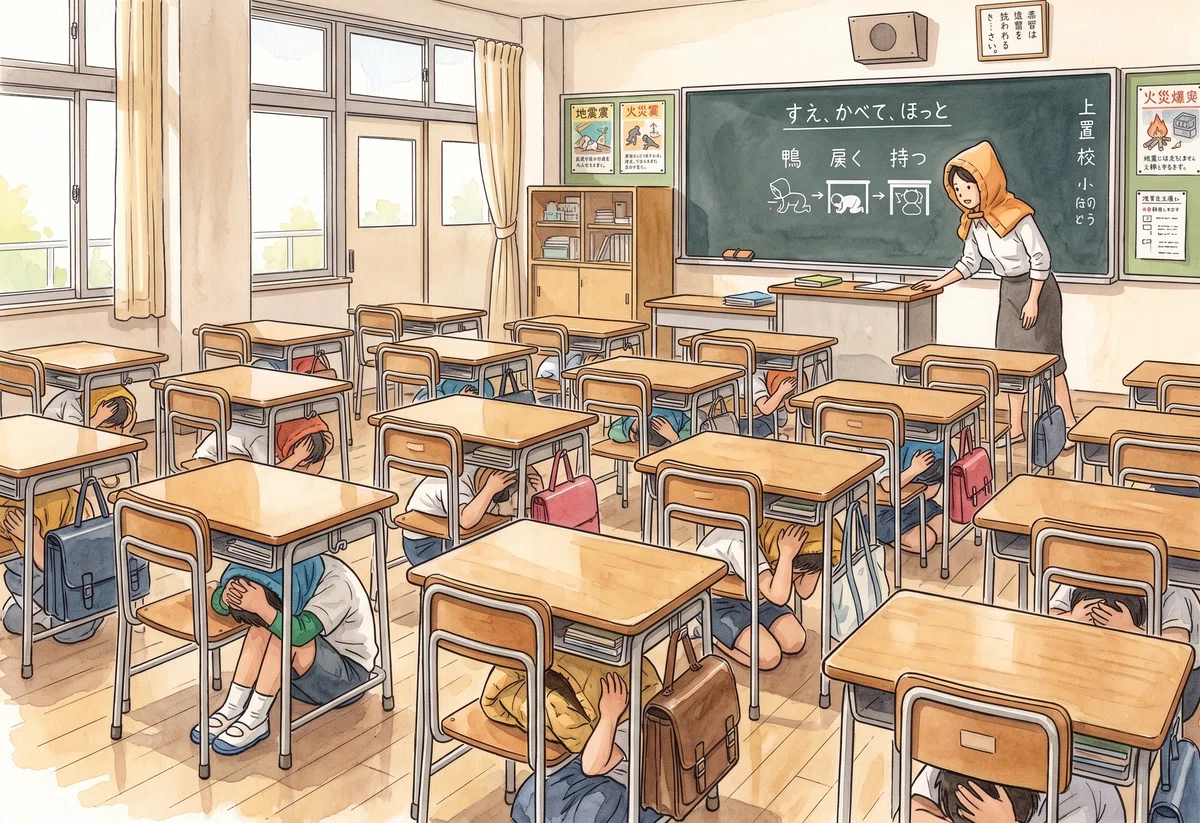
Japan has also experienced many natural disasters, including earthquakes, tsunamis, typhoons, floods, and landslides. Of course, Japan's disaster prevention measures are not perfect. Nevertheless, in Japanese schools, from childhood, What will you do if an earthquake occurs? Where should you evacuate to if a fire breaks out? What should be prioritized when a tsunami warning is issued? Whose orders will you follow? Where should we meet? We learn these things repeatedly through evacuation drills. Knowledge is not the only important thing. It's something you learn through physical experience. In the moment a disaster strikes, people are not always able to think calmly. I'll panic. It makes me want to find my family. I feel like going back to get my belongings. You might sometimes feel like taking pictures with your smartphone. That's why we train repeatedly during normal times. "When this alarm goes off, we'll run here." "If you think the river's water level is unusual, don't go near it." "Protect your own life before taking photos or videos." It is important to make this action a habit.
Hayabusa conducts "Japanese-style evacuation drills" at schools in Nepal.
In the future, when considering educational support as part of the Hayabusa Nepal Group, Distribute textbooks and uniforms. To improve school facilities. Create a scholarship.
Not only that, We want to make disaster prevention education itself one of the support measures. That's what I think. For example, in schools in Nepal, Earthquake evacuation drill. Flood evacuation drill. An evacuation drill simulating a landslide. fire training. First aid. How to contact family. Confirm emergency evacuation locations. They conduct training such as this. Furthermore, teachers themselves should also learn about disaster prevention. "The teacher knows." Not only that,
Up to the point where the child goes home and tells their family.
"To fear correctly"
Regarding disasters, There's no need to be so scared that you can't do anything. Conversely,"I'll be fine." Thinking that way is also dangerous. What's important is, To know correctly and to fear correctly. Know where the dangers are. Know when to evacuate. Learn the meaning of an alarm. Know where your family will be evacuated. and, If you're unsure, Evacuate even if you think it might be a little too early. In disasters, "I ran away, but nothing happened." That is not a failure. Rather, That's fine. but, "I didn't run away because I thought it would still be okay." Sometimes, things can become irreversible.
Reconstruction means "creating a society where lives are not lost in the next disaster."
When considering the recovery from this disaster, I believe that simply rebuilding roads, bridges, houses, and schools is not enough. If a similar disaster were to occur a few years later, Also in the same place, Also, in the same way, people who were unable to escape, If many more lives are lost, Can we truly say that the country has recovered? I don't think so. True recovery is It's not about the building being restored to its original state, To create a society where, when the next disaster strikes, we can save even one more life than the last time. I think so. that's why, Rebuilding schools is also necessary. Scholarships are also necessary. Support for daily living is also necessary. And equally, Education that protects lives is also necessary. Instead of simply imposing Japan's long history of disasters and its culture of disaster prevention education and evacuation drills, we will adapt it to Nepal's topography, schools, and communities. That too, Isn't this one type of support that only we, as a bridge between Japan and Nepal, can provide? Having experienced this disaster, I feel this very strongly.
Things Japan is doing for us
The Japanese government is also providing support to Nepal this time. Through JICA , we provided approximately 9.3 tons of emergency relief supplies, including tents, blankets, and sleeping pads. Furthermore, experts from the International Emergency Relief Team were dispatched to assist with identity verification. On September 8, an additional US$3 million in emergency grant aid was approved, and assistance is being provided through the WFP, IFRC, and IOM for food, health, water and sanitation, and essential goods. Ministry of Foreign Affairs As someone who works between Nepal and Japan, We are very grateful for this support coming from Japan. at the same time, What's truly important is what happens from now on. After the emergency relief team left. After the television cameras were gone. After the world started watching a different news story. Who will remain at that time? I believe that's where the real recovery begins.
Reconstruction is not about "returning things to how they were before."
The broken bridge, To the same place, Build with the same strength. The houses that were swept away, Rebuild it along the same dangerous riverbank. The damaged power plant, Reconstruction will be based solely on past flood scenarios. That won't lead to true recovery. The most emphasized point in the latest analysis of this disaster is: "If disasters cross national borders, then warnings must also cross national borders." That's the point. satellite. Seismic waves. River water level gauge. Drone. Communication network. siren. Evacuation plan. Cross-border information sharing, including between China and Nepal. Instead of just calling rescue teams after a disaster strikes, How much can we shorten the time between detecting the first anomaly and residents beginning to evacuate? That is precisely the investment that will save the next life.
And I think about those nine days of darkness once again.
The country's losses amount to $1.8 billion. The reconstruction will cost $4.78 billion. 5,130 people are missing. 1,385 bodies were recovered. Those are, of course, very important numbers. But what left the biggest impression on me this time was, One man, In the darkness, The fact was that he had been reciting prayers repeatedly. From the outside, It might look like I'm not doing anything. However, he, To prevent my heart from being swallowed by despair, I think they were fighting with all their might. And in the distance, the rescue team... "There might still be people alive." I was digging, believing that this was it. Inside the tunnel, One person believes in the rescue team. Outside the tunnel, The rescue team believes in the lives of the people inside. Those two "believes" It finally connected on the ninth day. I think this incident I don't want to simply call it a "miracle." The result of humans not giving up on being human Because I think so too.
Do you believe in God? Or do you believe in yourself?
I still don't know the answer. But perhaps, Perhaps there isn't a need to have just one answer. There are people who believe in God. There are people who believe in their families. There are people who believe in their friends. There are people who believe in the rescue team. There are people who believe in science. and, In the end, believe in yourself. "It's not over yet." and. If you are alive, Even if it's not a disaster, There are times in life when you enter a "pitch-black tunnel." I lost my job. The company isn't doing well. I failed the exam. You won't be able to study abroad. Losing family. To get sick. There are times when nothing seems to work. At that time, It's okay if we can't solve everything today. First, the next day. The next hour. The next step. I will move forward, believing only in that. Believing in oneself may be one of the "tools for survival" that humans can retain until the very end. Shah's nine days made me think about these things.







 EN
EN
 JA
JA