
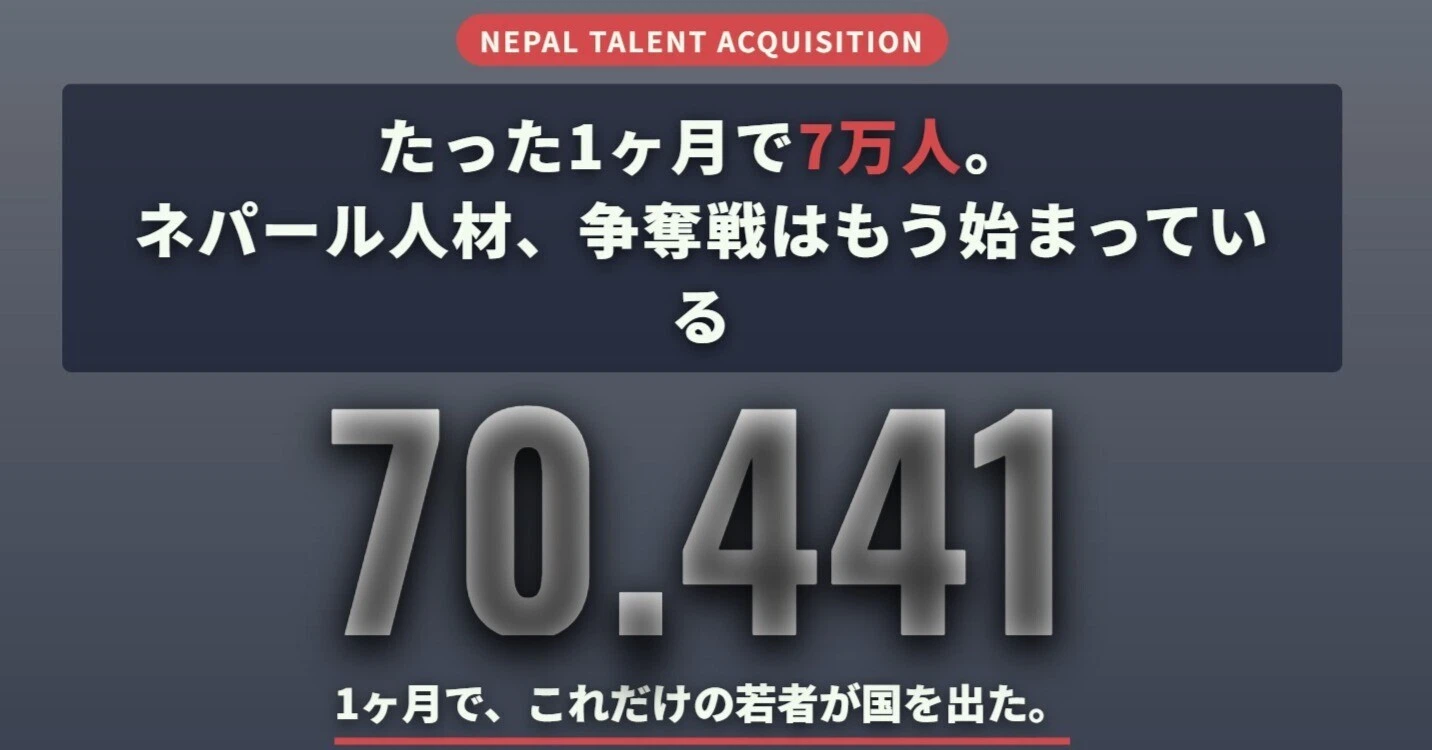
In just one month, 70,441 people. This is not the number of refugees from the war. This is the number of young Nepalese who obtained official work permits for overseas employment for just one month, mid-July 〜 mid-August (Saun month in the Nepalese calendar), 2026. This represents an increase of approximately 2,000 people compared to the same month last year. More than 114 countries continue to absorb the young people of this country. I have a question for Japanese recruiters, supervisory organizations, and registration support agencies. Is Japan really ready to participate in this battle?
The numbers speak to reality: Where are Nepal's young people?
According to a statement from the Nepalese Government and Overseas Employment Agency, the breakdown for the month of Saung (July 17 to August 16) is as follows: 70,441 people obtained work permits (total), of which 60,472 were men and 9,969 were women. 27,748 were repeat travelers (repeaters) The top destination is this one.
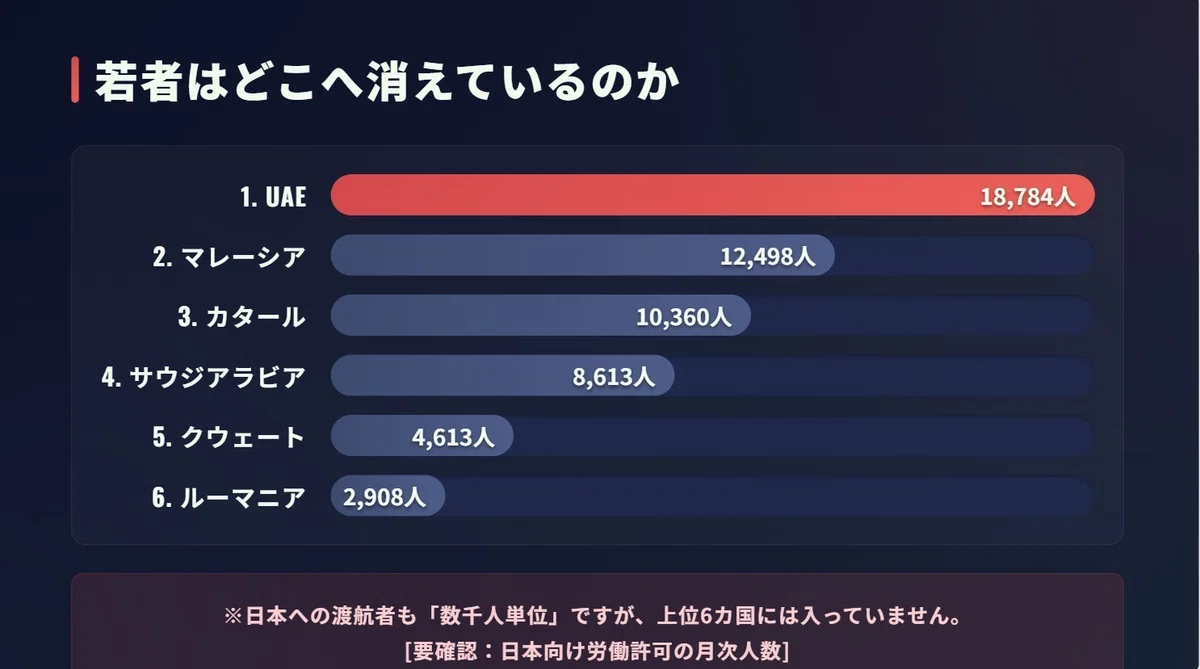
Ranking Countries Number of People 1 UAE 18,784 2 Malaysia 12,498 3 Qatar 10,360 4 Saudi Arabia 8,613 5 Kuwait 4,613 6 Romania 2,908 Japan does not rank among the top six countries. (Source: Nepal Overseas Employment Bureau, 2083/84 Sound Month Data)
Why the Middle East and Malaysia are strong
Looking at the outbound routes, 29,447 people went through manpower companies and 12,442 through personal agents. The use of personal agents is increasing, especially when traveling to Europe. The G2G (Intergovernmental Agreement) route to South Korea and Israel will only involve 712 people. The reason why the Middle East and Malaysia are strong is very simple.
This is because the process is relatively quick, it is easy to estimate the initial costs, and there is a system in place that makes it easier for people who have worked once to return. The high number of repeat travelers, 27,748, clearly demonstrates this. I'm going back to the country where I worked once. This means that the individuals themselves consider the country or route to be a "realistic and reliable option." Furthermore, in the Middle East and Malaysia, as in Japan, there are few cases where high language proficiency is required, and the preparation burden before visiting or traveling is relatively light. Initial costs also tend to be lower compared to Japan. Of course, the salary itself may not be as high as in Japan. However, the cost of living is also relatively low, so as a result it is easy to see what money you have left. In other words, for workers,
Easy to get to. Easy to work with. It's easy to go back. Easy to calculate. This clarity is a major strength of the Middle East and Malaysia.
The reality faced by young people who remain in the country
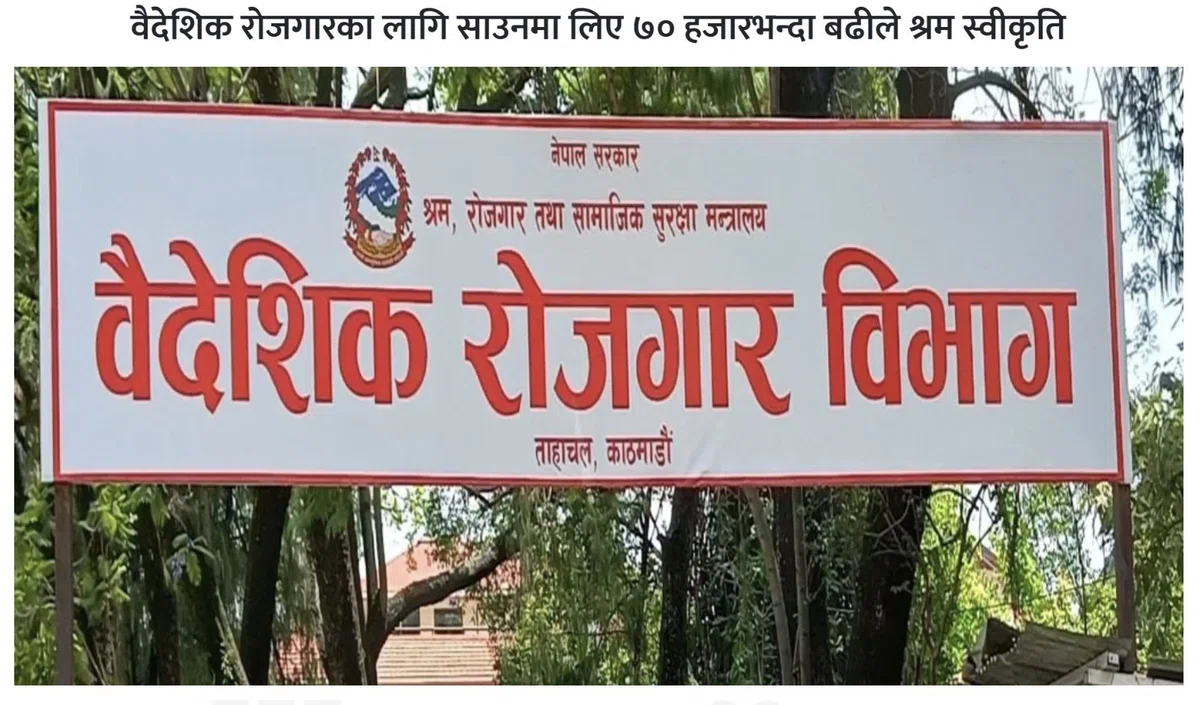
On the other hand, we cannot overlook the situation of workers who remain in the country. In the month of Saung alone, the Labor and Occupational Safety Bureau recovered 14 million rupees from unpaid businesses and made workers pay them. As a result of supervising 371 businesses nationwide, we have also collected fines of 220,000 rupees from businesses that engaged in child labor. These two numbers are actually connected. The more distrust there is within the country that "promised salaries are not being paid as promised," the more young people go abroad in search of "a country where contracts are kept." The Middle East and Southeast Asia are being chosen not because of low wages, but because of confidence in the "certainty of payment."







 EN
EN
 JA
JA