
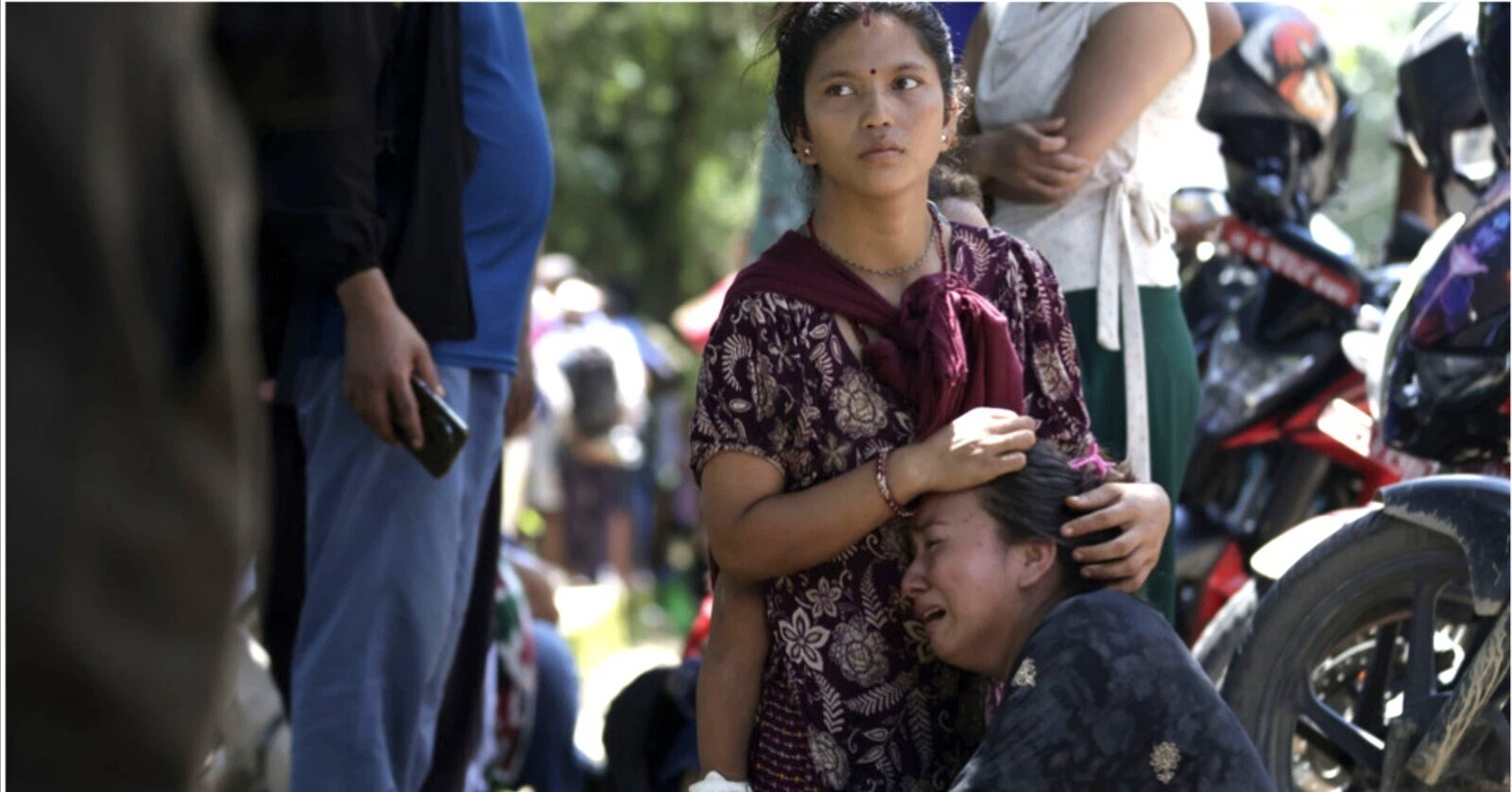
What will become of the cause, the government's response, international aid, the economy, tourism, and Nepalese talent destined for Japan?
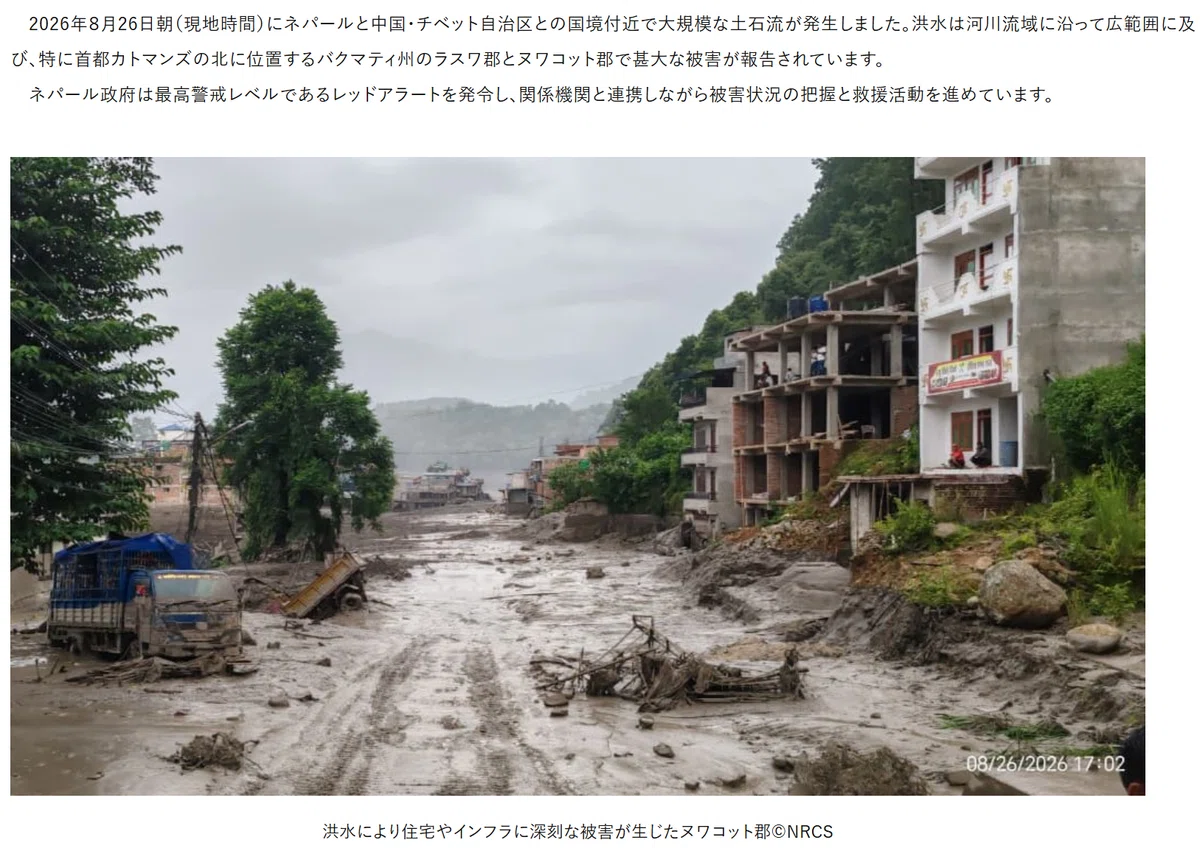
On August 26, 2026, a massive flood began in Rasuwa district, northern Nepal.
In the previous article, we summarized the situation as massive muddy water, rocks, ice, and sediment engulfed towns, roads, bridges, and power plants, and discussed "why the disaster became so severe." About two days later. As the search progresses, the extent of the damage is becoming clearer. On the other hand, the cause of the disaster has also been significantly revised from the initial explanation that "it was caused by an earthquake," based on satellite imagery and expert analysis. And now, Nepal is moving from "rescue" to "relief," and even further into the long process of "recovery and reconstruction." So, what do we know now? This information will be compiled by cross-referencing news reports from Japan, the United States, the United Kingdom, India, and Nepal with announcements from their respective governments and international organizations.
First, let's summarize the current damage.
According to Nepalese police figures as of 9 p.m. on August 27, 389 bodies have been identified and 466 injured people have been rescued in Nepal. The body is not just Laswa's. They have been found in a wide area affected by the floodwaters, including Nuwakot, Dhading, Chitwan, Gorkha, Tanahun, and East and West Nawalparasi. In particular, 137 bodies have been found in Chitwan and 87 bodies in East Nawalpalasi. This indicates that this flood was not just a disaster limited to Rasuwa, but had a significant impact downstream, from the Botekosi River to the Trishli River and then the Narayani River. Furthermore, according to figures released by the Japanese Ministry of Foreign Affairs based on information from the Nepalese side, and Japanese media reports on the morning of the 28th, the whereabouts of 910 people are unknown in Nepal . According to data released by the Nepalese Ministry of Foreign Affairs at 8 p.m. on the 27th, 596 foreigners from 33 countries remain missing. India 167, the United States 66, Ukraine 53, Malaysia 51, Australia 35, the United Kingdom 33, Canada 25, and Japan 5, among others. (Ministry of Foreign Affairs ) In China, reports indicate that three people have died and 558 remain missing in Tibet. Therefore, Western media outlets such as the Associated Press, The Guardian, and the Financial Times are reporting that "more than 390 people have died and more than 1,400 are missing" in Nepal and Tibet combined. However, caution is needed here. Because travel agencies, police, tourism authorities, local governments, and foreign governments each collect information separately, it's possible that the same person may appear on multiple lists. Therefore, now, "389 people have died, and approximately 910 remain missing on the Nepalese side. Including those on the Chinese side, the search for the whereabouts of over 1,400 people continues." I think that's the most appropriate way to express it. In times of disaster, accuracy is more important than speed when it comes to numbers.
The whereabouts of the five Japanese nationals remain unknown.
Unfortunately, as of the morning of the 28th, we have not been able to confirm that the five Japanese nationals are safe. Japanese media reports indicate that the five individuals are believed to be a family and that contact was lost after they entered Nepal from the Tibetan side. On the 27th, the Japanese Ministry of Foreign Affairs established a local task force headed by Ambassador Toru Maeda to Nepal. In Tokyo, a task force headed by the Director-General of the Consular Affairs Bureau was also established, and an Emergency Response Team (ERT) was dispatched . According to the Nepalese Ministry of Foreign Affairs' list of nationalities as of 8 p.m. on the 27th, there are still 5 Japanese nationals, with 0 confirmed and 5 whose whereabouts are unknown . I hope that their safety will be confirmed as soon as possible.
So, why did the great flood happen?
This is the most significant update since the last article. Immediately after the outbreak, "A magnitude 4.4 earthquake occurred." ↓ "The earthquake caused glaciers to collapse." ↓ "A flood occurred." This information spread. However, this explanation now needs to be corrected. AP interviewed experts who analyzed satellite images and confirmed that not only glaciers but also the bedrock beneath them had collapsed on a large scale in what appears to be a high-altitude mountainous area around Langtang Lirung. A massive mass of ice, rocks, and earth fell into the valley all at once. As it swept up the water from the narrow valley, it became a massive debris flow that flowed from the Lhende River into the Botekosi River system. Moreover, this collapse spanned over 600 meters, and it has been suggested that it may have fallen approximately 1,200 meters.
It is highly likely that the earthquake was not the cause.
Even more important is the analysis by the USGS (United States Geological Survey). Regarding the tremors initially reported as a "M4.4 earthquake," the USGS later determined that it was not an earthquake caused by normal crustal deformation. The seismic waves were generated by the massive ice and rock collapse and the resulting debris flow. That's what they're explaining. The Guardian also
“No earthquake had occurred.”
This conveys the USGS's view.
In other words, the most consistent trend at this point is:
A massive glacier and rockfall
→ an avalanche of ice, rock, and sediment
→ a massive influx into rivers
→ temporary river channel blockage and formation of natural dams
→ a massive outflow of water
→ a huge flash flood from the Botekosi River to the Trishli and Narayani Rivers.
That's it.
Some reports have described this as a "glacial lake outburst flood (GLOF)," but it remains to be seen whether this was a typical glacial lake outburst that had existed for some time, or an outburst-type flood caused by the temporary damming of a river due to the collapse of ice and rock formations . We still need to await the final scientific investigation.
It's probably best not to make a definitive statement here.
We shouldn't yet conclude that "climate change is the cause."
Another thing we need to pay attention to is climate change. Experts have long pointed out that rising temperatures in the Himalayas are destabilizing glaciers and permafrost, increasing the risk of ice and rock collapses in high-altitude regions. We also need to investigate the impact of this collapse. However, scientists interviewed by the AP also say that further investigation is needed before concluding that this particular collapse was directly caused by climate change . therefore, "Unrelated to climate change" To jump to conclusions is also, "Climate change caused these floods." It's too early to make such a definitive statement at this stage. I believe this is the most scientifically cautious perspective.And importantly, the disaster is not yet completely over.
Currently, rescue teams are most concerned about secondary flooding . The river is once again dammed by ice, rocks, and sediment, forming a new natural reservoir upstream. Water levels are rising on both the Nepalese and Chinese sides, and if the dam breaks, a large amount of water could flow downstream again. According to a Reuters report on the 28th, there are concerns that another 3 million cubic meters of water may flow in from the Chinese side, and some rescue teams are keeping their distance from the danger zone. In other words, "The flood happened on the 26th. It's over now." No, that's not correct. Caution is still necessary in the downstream areas.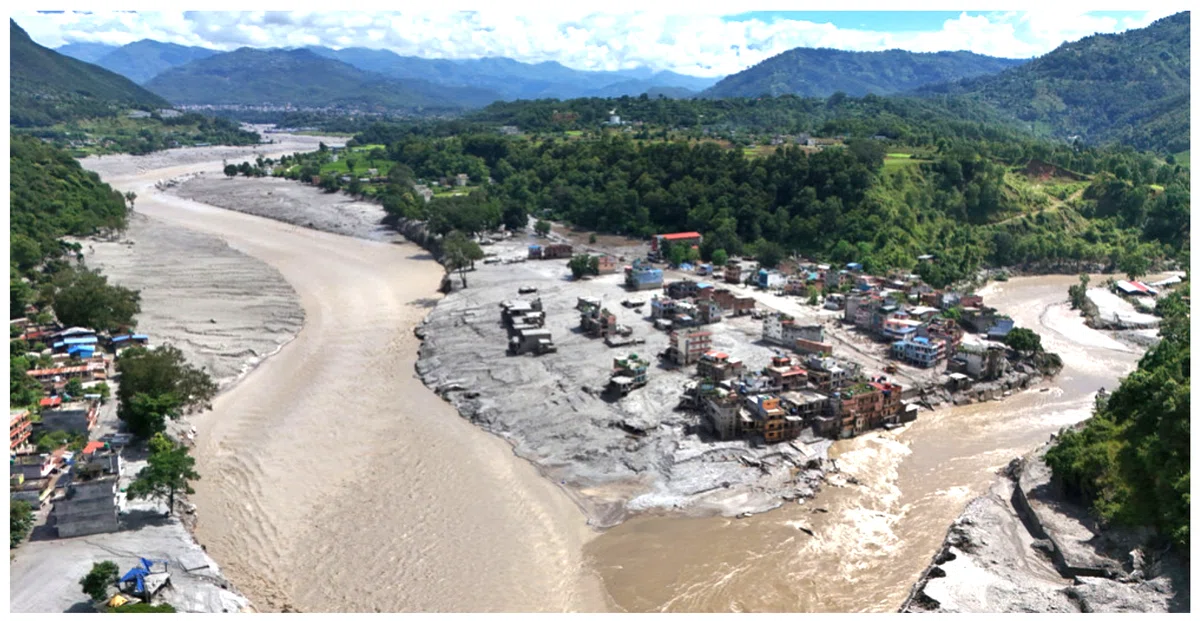
What I learned by comparing news reports from Japan, the United States, the United Kingdom, India, and Nepal
When comparing the major news reports from various countries, it becomes clear that each is focusing on different points. Nepalese organizations such as Kathmandu Post and OnlineKhabar are the most knowledgeable about "life on the ground," including not only the dead and missing, but also which bridges were destroyed, which schools were affected, power plants, roads, customs, and warning systems. The American newspaper AP has used satellite imagery to provide a detailed scientific analysis of the disaster's cause, stating that "not only the glacier but the bedrock itself collapsed." The British newspaper The Guardian has given extensive coverage to the more than 1,400 people missing, foreign tourists, international aid, and the secondary disasters caused by the new natural dam lake. Indian Express in India has been extensively reporting on the safety of Indian citizens. Currently, contact is reportedly lost with approximately 288 Indians, while the Indian government began transporting aid supplies to Nepal immediately after the disaster. Japanese media coverage is, as expected, focused on the whereabouts of the five Japanese citizens and the Japanese government's response. TV Asahi also updated its news early on the 28th, reporting 389 dead, 910 missing, and 5 Japanese citizens still missing. In other words, you can't see the whole picture by only looking at one media outlet. In major disasters that cross national borders like this one, Local government + local media + international news agencies + national governments It is extremely important to compare and contrast these two things.
What is the Nepalese government doing?
The government's response is also becoming more serious. First, it has been decided that those who are injured will receive free medical treatment at public medical institutions and other facilities . Restoring roads, power, and communications is a top priority, and the families of those who died will receive financial assistance based on existing systems. Furthermore, the government divided disaster response into 12 areas. Rescue, medical services, communications , power restoration, relief supplies , body management, international assistance, coordination, and recovery. We have established a team to handle these matters. The affected municipalities of Rasuwah, Nuwakot, and Dhading have been designated as "disaster-prone areas" and their response measures are being strengthened.
An emergency response desk specifically for foreigners has also been established.
Because a large number of foreign tourists were involved, the Nepalese Ministry of Foreign Affairs established an Emergency Control Room ECR /Emergency Response Team . We have streamlined the search, confirmation of safety information, and coordination with foreign embassies. The Ministry of Foreign Affairs is urging people to refrain from spreading unverified information on social media and to use official sources instead. This time, on social media, footage of past floods and even earthquakes from completely different locations were mixed together and spread. Having video footage does not equal fact. This is another important lesson we should learn from this disaster.
A one-door system that manages support through a single point of contact.
The Nepalese government has implemented a one-door system to efficiently deliver relief supplies and donations to disaster victims and prevent fraud and duplication . This system manages support from individuals, companies, NGOs, and overseas organizations through designated government channels. The government has officially called for support for the Prime Minister's Natural Disaster Relief Fund and other related initiatives. The desire to help is important. However, rather than sending large quantities of clothing and food to the site without permission, "We will identify what is truly needed and provide support through a reliable channel." That is more important.
The circle of support is also expanding within Nepal.
Government officials also took action. Federal government employees will contribute two, five, seven, or ten days' worth of salary to the disaster relief fund, depending on their position, and this is expected to amount to approximately 360 million Nepalese rupees . Support has also begun from private companies. Kalika Construction donated 10.1 million rupees to the Prime Minister's Disaster Relief Fund. Ncell has also contributed 10 million rupees and is providing free communication services so that victims can contact their families. It's not just about the amount of money. Connect the communication. I'm going to drive the car. Transport food. We will provide shelter. The circle of support is expanding in ways that each individual can contribute.
Support has begun to pour in from around the world.
Support from overseas is also coming in very quickly. India provided approximately 50 tons of relief supplies. The UK has pledged £5 million in aid and the deployment of emergency response personnel. The United States will provide $500,000 and disaster response advisors. China and South Korea have also sent funds and rescue and response teams, and various countries and organizations, including the EU, are providing assistance. The World Bank has also indicated it may provide emergency assistance of up to 25 billion Nepalese rupees . The United Nations also made an emergency contribution of $2.5 million from its Central Emergency Response Fund . UNICEF, WFP, UNFPA, WHO, and others are providing food, generators, hygiene supplies, and medical assistance.
The Red Cross estimates that approximately 93,000 people were affected.
The IFRC (International Federation of Red Cross and Red Crescent Societies) currently estimates that approximately 93,000 people may have been affected by the disaster .
They have launched an appeal for 25 million Swiss francs in emergency aid, and as a preliminary step, they have already injected approximately 1 million Swiss francs in emergency funds. This shows that we shouldn't only look at the "dead and missing persons." People who have lost their homes. People who have lost their jobs. People who lost their farmland. A child who can no longer go to school. Areas where water and electricity have become unavailable. There are far more people who will need support in the future.
My biggest concerns are "children" and "education."
Education is a topic I felt I should definitely cover in future articles. According to UNICEF, at least 17,000 children have been affected by the floods, and approximately 10,000 school-aged children are in urgent need of educational assistance. Temporary learning facilities, educational materials, and mental health support are needed. UNICEF is appealing for $17.2 million in aid for emergency response and initial recovery. According to initial figures from the Nepalese Ministry of Education, 20 schools were affected in Rasuwa, Nuwakot, and Dhading alone . In some schools, classrooms are buried in mud and debris, and the safety of teachers and students is unknown. For those of us who run the school, this is a very important issue. Reconstruction is, It's not just about fixing roads. Bringing children back to school is also a part of recovery.
So, what will happen to the Nepalese economy?
"Will the Nepalese economy be alright after these floods?" I think Japanese companies will also be concerned. Currently, there are no formal estimates of the impact on GDP growth. therefore, "By what percentage will the Nepalese economy fall?" We shouldn't be making predictions like that at this stage. However, the areas that will be most significantly affected are already known. The Nepalese government's initial estimates suggest that infrastructure alone could suffer damages worth approximately 200 billion Nepalese rupees. These are preliminary figures and may change.
① Impact on roads and trade with China
The approximately 42km road from Betrawati to Rasuwagadhi, leading to the Chinese border, was severely damaged. Dozens of bridges were also washed away. The Rasuwagadhi customs facility has also suffered catastrophic damage. Initial estimates by local industry sources suggest that approximately 200 containers in the customs yard may have been swept away by the floods. It will likely take some time for land trade routes with China to be restored.
② Impact on hydroelectric power
Nepal is developing hydropower as a key industry for the future. In this instance, 14 hydropower-related projects, including those currently in operation and under construction, have been affected in Rasuwa and Nuwakot. This includes important projects such as Rasuwagadhi, Chilimé, and Upper Trishuli. Because not only power facilities but also transmission equipment, roads, and bridges are damaged, simply repairing the power plant is not the end of the story.
③ Tourism is likely to be the first to be affected.
I think the impact on tourism will be very significant. The Rasuwagadhi–Kerung route, which suffered significant damage this time, is a major route for the Kailash Manasarovar pilgrimage . This year, in particular, demand for pilgrimages was strong, benefiting a wide range of industries, including hotels, travel agencies, airlines, guides, and restaurants. According to a report by the Kathmandu Post on the 28th, former Nepal Tourism Board CEO Deepak Raj Joshi suggested that the impact on the tourism industry could last for at least six to seven months . Travel and tourism are estimated to account for approximately 6.6% of Nepal's GDP. However, what's important here is, "A major disaster has struck Rasuwa, meaning all of Nepal is unsuitable for tourism." The key is to avoid spreading that image to the world. Prioritizing the safety of the affected areas, we will accurately communicate which areas are dangerous and which are accessible. This information dissemination is crucial for the recovery of the tourism industry.
So, will the influx of Nepalese talent to Japan stop?
This may be of most concern to Japanese companies, supervising organizations, and registered support organizations. In conclusion,
At present, the supply of personnel from Nepal to Japan has not come to a nationwide halt.
This is quite important. The FEIMS (Following Election Information Service) of Nepal's Department of Foreign Employment (FEIMS) continued to operate its work permit application system for new and re-entering workers on the 27th, and the FEIMS also posted notices such as the Pre-Departure Orientation (PDOT) as usual. Furthermore, as of the morning of August 28, Tribhuvan International Airport in Kathmandu operates international flights to destinations such as Delhi, Bangkok, Dubai, Kuwait, and Istanbul. VFS Global Nepal, which handles Japanese visas, does not currently have any notice of a complete closure due to flooding on its Japan-向け page, and its application and reservation system is still accessible.
One more thing I want Japanese companies to know
In fact, shortly before the floods, sending organizations in Nepal had warned of suspending operations due to systemic issues such as fees. This issue should not be confused with the recent floods. An agreement has been reached with the government, and it has been decided that the protests will be called off on August 17th and that normal operations will resume from the 18th. In other words, currently, "People cannot leave Nepal due to floods." "Remote agencies have shut down nationwide." That's not the situation.
However, this could have a significant impact on each individual candidate.
The fact that the national system is functioning and that each individual's life is proceeding as normal are two completely different things. If a candidate has family in Raswa, Nuwakot, Dhading, Chitwan, etc., I can't get in touch with my family. My family home was damaged in the disaster. I have to go back to my hometown to look for my family. There are no roads, so it's impossible to get to Kathmandu. I lost my passport, academic transcripts, etc. I cannot participate in the interview. I have to postpone my health checkup and Japanese language exam. I can't go on the VFS reservation date. These kinds of problems are quite possible. Japanese companies, for the time being, "No contact = declined" "Not showing up for the interview = lack of motivation" I would like to ask you not to jump to conclusions so quickly. It is important to allow several days or even several weeks to check on the student's situation through the sending organization or school.
Overseas employment for Nepalese people is a very significant trend.
In the month immediately preceding the recent floods, 70,441 people in Nepal obtained work permits for overseas employment . Of these, 42,693 were new travelers and 27,748 were returning travelers. In the previous fiscal year, over 790,000 work permits were issued. Such a large social system does not suddenly come to a standstill because of a single local disaster. We can also continue our recruitment activities targeting Japan. Rather, what's important is, The question isn't "whether or not to stop hiring," but rather "how to continue hiring while being considerate of candidates affected by the disaster." Wouldn't you agree?
What impact will this have on Japanese language schools?
At this time, we have not found any information indicating that all Japanese language schools across Nepal will be shut down due to the recent floods. Japanese language education, particularly in Kathmandu, is not in any position to come to a halt. However, some schools A student from a disaster-stricken area. A student who has lost their family's source of income. Students who are unable to pay their tuition fees. Students who have no choice but to prioritize part-time jobs or full-time work in order to support their families. A student who is unable to concentrate on studying due to emotional shock. This may appear. Therefore, the greatest impact on Japanese language schools is not the building, "Students and their families" I think so.
Disasters may increase the number of people seeking overseas employment. However...
People who lost their homes, farmland, and jobs, "I can't support my family unless I work overseas." One possible interpretation is that... If the economic impact is significant, it's possible that in the long term, more young people will want to work abroad. However, those of us in the human resources industry "An opportunity to acquire talent" I don't think we should view it that way. They charge exorbitant fees to people in need. They send people overseas without adequately explaining the job. They pressure you into signing a contract by saying, "You can go to Japan right now." We must prevent such things from happening. Especially after a disaster, Reasonable fees. Sufficient Japanese language education. A precise description of the job. Understanding from the individual and their family. And I even think about my career after going to Japan. I think this is a time when the quality of the human resources industry will be put to the test.
What can we, as a school, do from now on?
We ourselves should think about what kind of support we can provide as an educational institution, rather than simply saying, "We'll just make a donation and that's it." We will confirm the safety of students, teachers, staff, and their families. We will identify those from the disaster-stricken areas and check not only their own situation but also the impact on their families' housing, living conditions, and tuition fees. We will consider deferring or reducing tuition fees for students affected by the disaster, providing consideration for absences, and offering free supplementary lessons. Providing "educational support" to ensure that students do not give up on their studies because of the disaster is the most direct support schools can offer. We can create support in collaboration with Japanese companies. By calling on Japanese companies that employ Nepalese personnel to cooperate to the extent that it is feasible, we can create a system where schools and companies work together to support students and educational institutions affected by the disaster. Donations will be accepted through transparent, public, and trustworthy channels. Priority will be given to organizations where the use of funds can be verified, such as the Prime Minister's Disaster Relief Fund, the Nepal Red Cross, UNICEF, and the IFRC. We provide long-term support for the recovery of children's education. This includes providing desks, teaching materials, uniforms, PCs, and Japanese language education support for schools affected by the disaster—support that becomes especially necessary after the initial relief efforts are over.
Making schools a hub for accurate information in Japanese and Nepali. Disseminating information to Japanese companies, students, and families, and refraining from spreading misinformation and outdated videos, are also valuable forms of disaster relief.
The support that schools can provide is, "Send something" I don't think that's the only reason. Don't stop education. That is precisely the kind of disaster relief that only schools can provide.What can we learn from this disaster?
And I believe this is the most important part of this article. It's not that Nepal's flood warning system was completely ineffective this time. According to Nepal's Flood Forecasting Division, more than 600,000 SMS alerts were sent to areas including Rasuwa, Nuwakot, Dhading, and Chitwan after flood information was received . The floodwaters moved from Botekosi to Trishli and Narayani over approximately 10 hours, and some areas downstream were able to evacuate due to warnings. However, the problem lies further upstream. The system for detecting anomalies when ice or rocks collapsed in high mountains was insufficient. Then, the floods struck, destroying the river monitoring facilities themselves one after another. This flood crossed the border from the Chinese-Tibetan side. Therefore, as the Kathmandu Post points out, If floods cross national borders, then warning systems must also cross national borders. I agree completely.
Putting ancient wisdom to use with modern science.
In my previous article, I wrote about how in old Nepal, villages were built on mountainsides and other low-lying areas, avoiding riverbanks and lowlands, and using the lowlands for farming. Of course, in modern times, with the population growing and the need for roads and markets, "Let's go back to our old way of life." That's not the point. but, A river needs space for the water to spread out. You shouldn't build just anything on a dangerous floodplain. Nature is unaffected by land boundaries drawn by humans. I believe that the wisdom that people of the past have gained through experience is worth reconsidering. There, Satellite image. AI. Weather radar. River sensor. Satellite communications. Drone. Emergency notifications to your smartphone. Combine. Ancient wisdom × Modern science. Perhaps that is the future of disaster preparedness for Nepal, a country that lives in the Himalayas.
Simply "restoring things to how they were" does not constitute recovery.
Rebuild the road that was washed away by the flood in the exact same location, using the exact same design. Rebuild the broken bridge exactly as it is. They will rebuild the houses that were swept away, along the same riverbank. So, the same thing could happen again. What is needed for this reconstruction is Build Back Better: To rebuild stronger and safer than before. is. Distance from the river. The height of the bridge. The location of the road. Power plant design. Backup of communication equipment. Evacuation shelter. Disaster prevention education in schools. Land use regulations. We need to review everything. Reconstruction is, The goal is not to "restore things to how they were," but to "create a society where lives are not lost next time." I think so.
How do we pass on the memory of disaster to future generations?
The scary thing about major disasters is that, as time passes, people tend to forget about them. Several years passed. The roads are being renovated. The town returns. and, "It should be alright now." I started to think that. Therefore, the role of school education is important. How high did the water reach? Why do we have to run away? What do you do when the alarm sounds? Where is the evacuation site for my village? Where did the floods occur in the past? We teach that to children. And this time, we will record the stories of those who were saved, those who lost family members, and those who participated in the rescue. Transforming the memory of disaster from "news" to "education." That may be the most important thing that those who have passed away can pass on to the next generation.
Can Nepal recover?
I believe I can recover. However, this does not mean that things will return to normal without any intervention. The Great Earthquake of 2015. corona. flood. Political turmoil. And then there's this disaster. Nepal has experienced many major difficulties. The roads will be rebuilt this time as well. A bridge can also be built. The power plant will likely be restored as well. Tourists will likely return as well. I think the number of young people going to Japan and the number of students learning Japanese will continue to increase. However, true recovery is... It's not just about restoring the building to its original state. What lessons can we learn from the lives lost this time, and how many lives can we save the next time a similar natural phenomenon occurs? Only after achieving all of that can we truly say that the area has been "recovered."
Because we are the ones who connect Japan and Nepal
In my previous article, I wrote that I was reminded of the scene I witnessed in Fukushima during the 2011 Great East Japan Earthquake, when massive floodwaters surged into the town. Watching the footage from Nepal this time reminded me once again of the "power of water" that I felt back then. Humans cannot completely stop the forces of nature. but, Know where the dangers are. Let me know as soon as possible. run away. Build it in a safe location. Help people in need. Pass it on to the next generation. Humans can do that. And there's one more thing we, who connect Japan and Nepal through human resources and education, can do. To all Japanese companies, "Nepal is in a difficult situation, so let's stop hiring." Instead, "Especially during times like these, let's try to understand the people of Nepal and build long-lasting relationships with them." Our goal is to deliver information that makes people think, "That was useful!" The supply of Nepalese workers continues to this day. Japanese language education continues. Sending out passengers is also continuing. However, behind each of them is a family. I have a hometown. I have a life to live. Through this disaster, we have learned to view foreign workers not in terms of "numbers," To see them as an individual. I hope that both the Japanese and Nepalese sides will reconsider this matter. I sincerely hope that all those affected by the disaster can return to a safe and secure life as soon as possible, and that as many people as possible, including the five Japanese citizens whose whereabouts are still unknown, will be able to return safely to their families. *This article is based on information confirmed as of approximately 8:40 AM (Nepal time) on August 28, 2026. Information has been cross-referenced from Nepalese police, the Nepalese Ministry of Foreign Affairs, NDRRMA, the Department of Foreign Employment, the Japanese Ministry of Foreign Affairs, Kathmandu Post, OnlineKhabar, Reuters, Associated Press, The Guardian, Indian Express, Asahi Shimbun/TV Asahi, the United Nations, IFRC, UNICEF, WHO, and others. The number of dead and missing, the status of foreigners, and the risk of secondary flooding will continue to be updated. In particular, the number of victims may differ depending on the time of announcement and the calculation method, so please check the latest government announcements.







 EN
EN
 JA
JA