
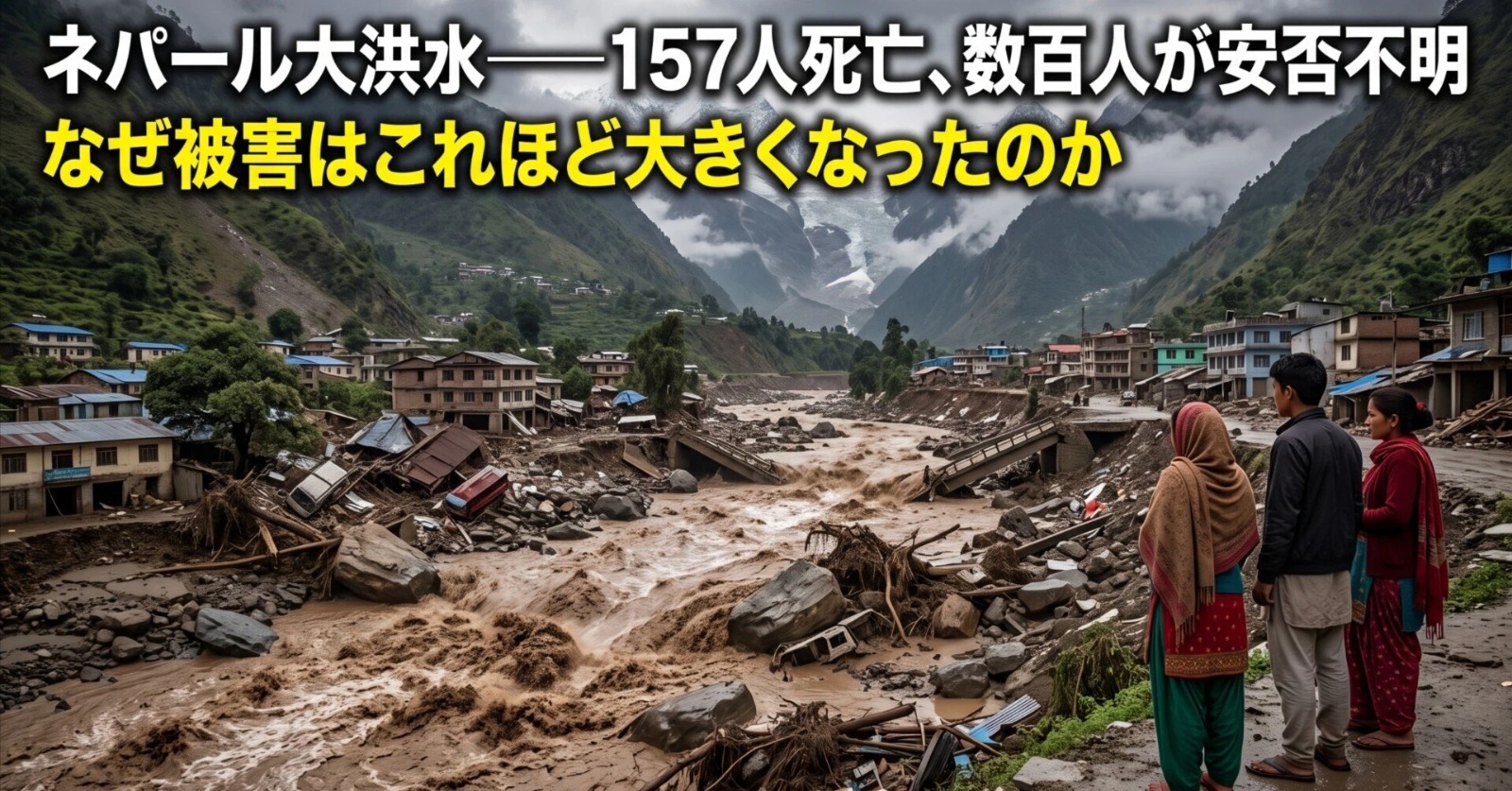
August 26, 2026: The "water, mud, and rock" disaster that began in Last Word
Morning of August 26, 2026.
From Rasuwa district in northern Nepal, near the border with China and Tibet, floods of unimaginable scale surged downstream. This is not simply a flood caused by heavy rain causing the river to swell. A massive amount of water, mud, huge rocks, ice, driftwood, cars, and even building debris mixed together and flowed down the valley as one gigantic mass.From Rasuwa to Nuwakot, Dhading, Chitwan, and further downstream. The river, which normally supports people's lives, instantly transformed into something that could not be stopped by human power. According to the latest information available as of the morning of August 27, around 7:00 AM Nepal time, Nepalese police have confirmed 157 deaths and 41 people are receiving treatment in hospitals. Rasuwa is not the only victim. Bodies have been recovered in several downstream districts, including Nuwakot, Dhading, Chitwan, Gorkha, Tanahun, and eastern Nawalpalasi. And the whereabouts of many people remain unknown.
Why are the numbers different: "403" and "484" tourists?
Meanwhile, a broader count by the Nepalese Prime Minister's Office indicates that 484 tourists and pilgrims , including those on the Kailash and Manasarowar pilgrimages and other travelers , are out of contact. Mobile phones, electricity, internet, and roads are all simultaneously cut off in the affected areas. This may include people who have evacuated to a safe place but are unable to contact their families or travel agencies. The recent news reports have presented conflicting figures, such as "384 missing," "403 unaccounted for," and "484 with unknown whereabouts." This isn't because the information is incorrect, but rather because the data was compiled at different times and for different groups . According to data collected by the Nepal Tourism Board from travel agencies and other sources, contact has been lost with 403 travelers. Of these, 341 are foreigners and 62 are Nepalese. The group includes 133 Indians, 47 Americans, 34 Australians, 33 Britons, 24 Canadians, 19 Malaysians, and 5 Japanese .
Meanwhile, a broader count by the Nepalese Prime Minister's Office indicates that 484 tourists and pilgrims , including those on the Kailash and Manasarowar pilgrimages and other travelers , are out of contact. Mobile phones, electricity, internet, and roads are all simultaneously cut off in the affected areas. This may include people who have evacuated to a safe place but are unable to contact their families or travel agencies.
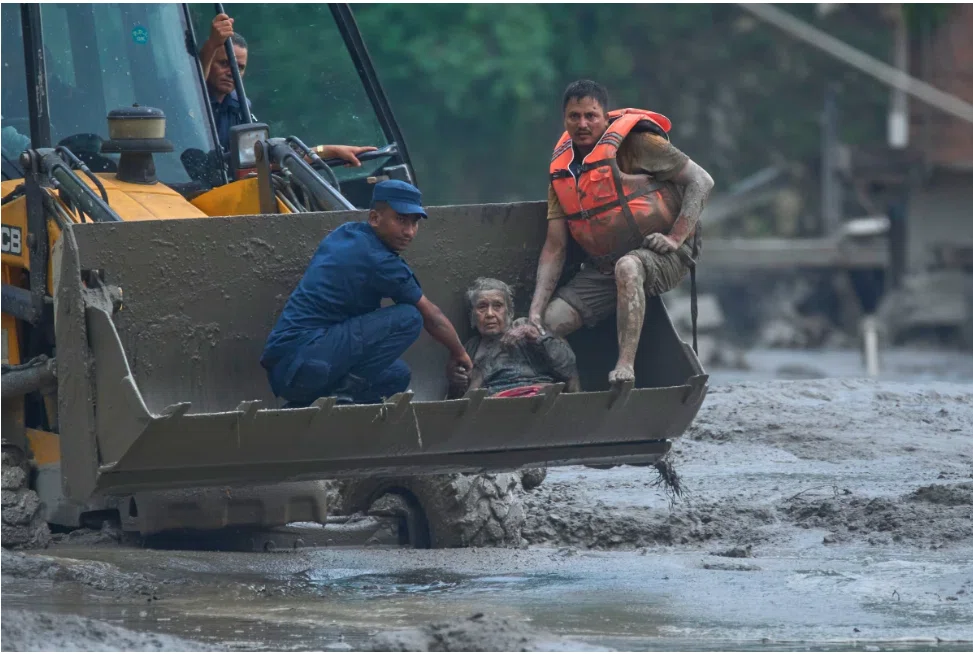
We have been unable to contact any of the five Japanese individuals.
For Japan, this disaster is by no means a distant event. According to the Japanese Embassy in Nepal, they have been unable to contact five Japanese nationals who are believed to have been on the same tour . The Japanese Embassy has requested the Nepalese government to assist in the search and rescue efforts. Furthermore, on the 27th, the Japanese Ministry of Foreign Affairs strengthened its response. According to a message from Foreign Minister Motegi, after the Nepalese government announced that Japanese nationals were among the missing persons, the Ministry of Foreign Affairs immediately established a local task force headed by the Japanese Ambassador to Nepal, and a Ministry of Foreign Affairs task force in Tokyo headed by the Director-General of the Consular Affairs Bureau . Furthermore, in order to make every effort to protect Japanese nationals, the government has ordered the dispatch of an Overseas Emergency Deployment Team (ERT) . Prime Minister Takaichi also called for information regarding the five Japanese nationals. "I pray wholeheartedly that these irreplaceable lives will be protected." They have sent out a message to that effect. I sincerely hope that the safety of all five people will be confirmed as soon as possible.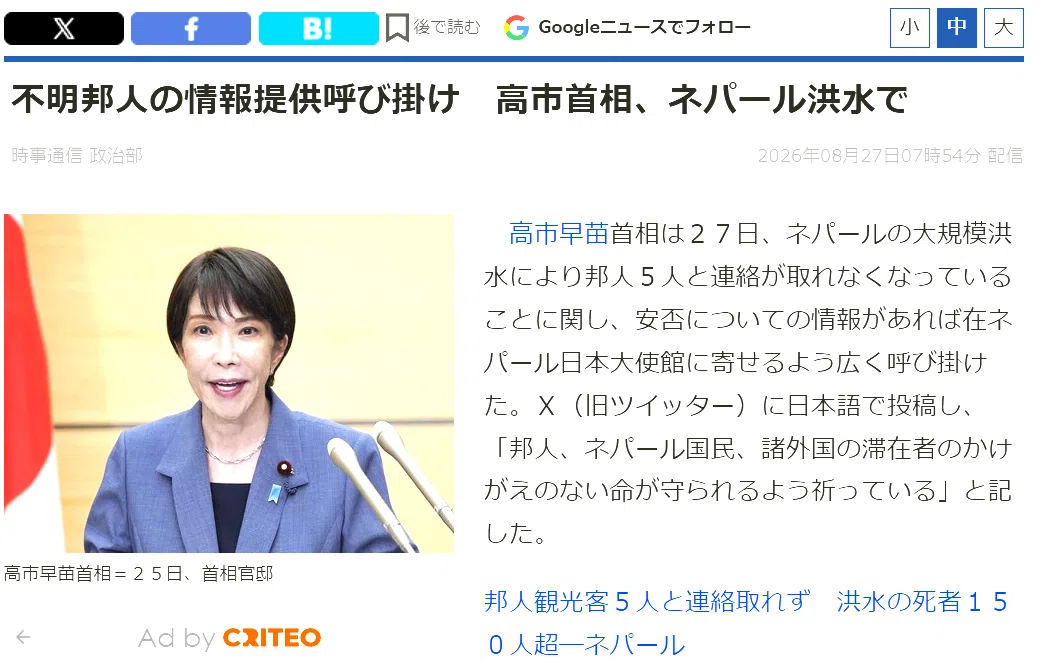
What exactly happened?
The statement "It was caused by an earthquake" needs to be corrected now.
This is extremely important. Immediately after the event, the U.S. Geological Survey (USGS) recorded tremors that were described as a "magnitude 4.4 earthquake." Earthquake → Glacier/rock collapse → Flood This explanation became widespread. However, according to the latest Reuters report, the USGS has since explained that the tremors were not caused by an earthquake due to normal crustal movement, but rather by seismic waves generated by the collapse of a large amount of ice and rock, and the resulting debris flow . In other words, the more promising option at this point is, Massive glacial and rock collapse → massive amounts of sediment and ice flow into rivers → blockages rivers or push out large amounts of water → creates huge flash floods containing mud, rocks, and water. That's the general flow. however, The reason why the glacier collapsed is still not confirmed. Satellite images have also confirmed evidence of rapid snowmelt immediately before the disaster. The relationship with global warming and glacier retreat will likely be investigated further. However, at this point, "This flood was caused solely by climate change." We shouldn't jump to such conclusions. We need to wait for scientific investigations.And the disaster is not yet over.
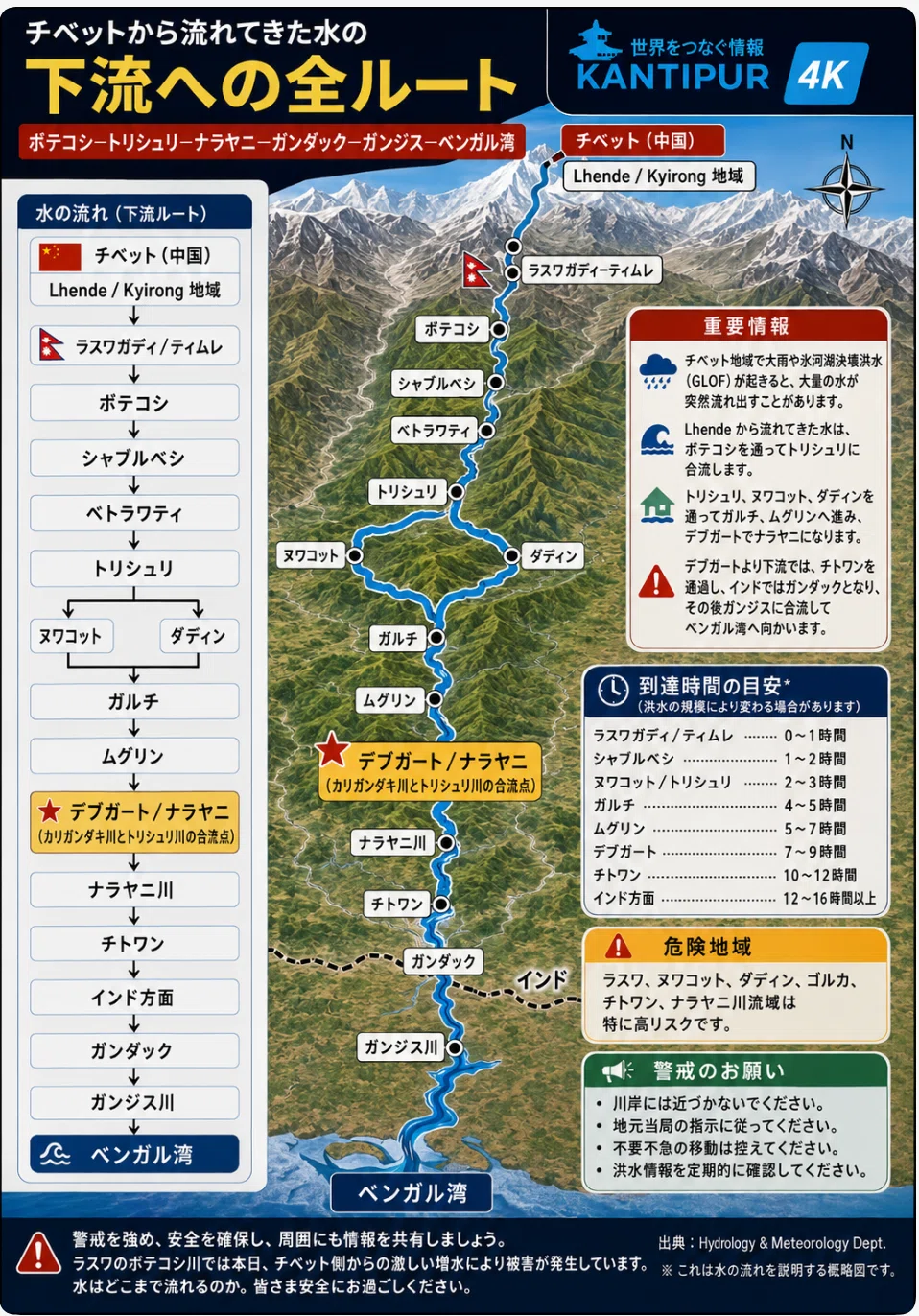
An initial analysis released on August 27 by the Nepal Hydrometeorological Department indicates that the water formed by damming the river upstream has not been fully released, and there remains a risk of further flooding . The Bhote Koshi-Trishuli-Narayani river system requires continued monitoring, and residents near the rivers are being urged to be vigilant. Rain is forecast to continue on the Chinese-Tibetan side as well, and vigilance remains high against secondary disasters such as floods and landslides. Looking at the watershed map that has been shared this time, Around Lhende → Rasuwagadhi / Timure → Bhote Koshi → Syaphrubesi → Betrawati → Trishuli → Galchi → Muglin → Devghat → Narayani → Chitwan → Gandak water system of India It is clear that they are connected. However, there is one thing to note about this diagram. This is not a map showing the "flooded area" caused by this flood. This is merely a schematic diagram illustrating which water system the water ultimately flows into. Meanwhile, according to Reuters, a warning has been issued in Bihar, India, and approximately 5,000 people have been evacuated. Natural disasters do not stop at national borders.
Why did the damage become so extensive?
The main reason is that the natural phenomenon itself was simply enormous. But is that all? As I watched the footage, I was thinking about something else.
I remembered the huge waves I saw in Fukushima in 2011.
As I, Darrell Umesh, watched the images of the recent floods in Nepal, I was reminded of the massive waves that swept through the towns of Fukushima during the 2011 Great East Japan Earthquake. The power of water is truly terrifying. Normally, rivers are calm. They provide water to humans. They support agriculture. They generate electricity. They enrich our lives. However, once it becomes a massive mass of water, it can easily swallow up roads, bridges, houses, cars, and everything else that humans have built. What I felt during the Great East Japan Earthquake, "The power of water is beyond human control." I'm feeling that again in Nepal this time.
Why did ancient Nepalis build villages on mountainsides?
I have always been respectful of older people. "In the past, people didn't build houses right next to rivers." That's what I've been told. They built villages on mountaintops and slopes, and used the lower plains for agriculture. Farmland is important land for producing food, so we don't build houses there indiscriminately. The area near the river is at risk of flooding. In ancient times, higher ground offered a better vantage point for surveying the surroundings and served a defensive purpose. I grew up hearing stories like that. Upon further investigation, it turns out this wasn't just a simple folktale. The "Compendium of Environment Statistics Nepal 2015" from Nepal states that, from the 1950s to the 1960s, settlements in mountainous and hilly areas were mainly located on ridges and the middle of mountain slopes , while lowlands and basins were primarily used for agriculture and were not often used for permanent settlements. Furthermore, records show that from the 1970s onward, the development of roads and bridges led to a stronger tendency for people to migrate from mountainous areas to valleys and lowlands. This is very thought-provoking.
We approached the river seeking "convenience."
Being close to the road is convenient. It's close to the market. Buses come here. You can do business. It's flat, so it's easy to build a house. As a result, people, houses, shops, hotels, power plants, banks, and government facilities have become concentrated along roads, rivers, and valleys. Recent studies in Nepal have also pointed out that the expansion of housing and roads along rivers, encroachment on floodplains, narrowing of river channels, and inappropriate land use significantly increase the risk of damage from floods. Of course, this point should not be misunderstood. This massive flood was not "caused" by residential development along the river. The direct trigger for this incident is believed to be a large-scale ice and rockfall that occurred in the high-altitude region near the border. but, The occurrence of a natural phenomenon and the number of people who die as a result of that phenomenon are two different issues. Even with the same flood, if there are no houses in that location, people won't be swept away. If there are no markets, shops won't be lost. If there are no roads or power plants, the economic losses will be different. Natural disasters and "damage caused by disasters" are not the same thing.
Early warnings had been issued. Even so, the damage could not be stopped.
It's also inaccurate to simply conclude that the damage spread because there was no warning system. Nepalese government agencies have issued warnings to downstream areas, and according to the Ministry of Energy, more than 200,000 SMS alerts have also been sent. As a result, in areas like Muglin, where there was time before the floods arrived, residents were able to move to higher ground, which helped mitigate the damage. However, the situation was different upstream. The flood came in far too quickly. Furthermore, the water level monitoring facility itself was damaged, and communications were cut off. In other words, what's needed going forward isn't just "issuing an alarm." I believe the goal is to create a single system that detects anomalies upstream, instantly shares that information across national borders, and ensures residents can evacuate without hesitation .
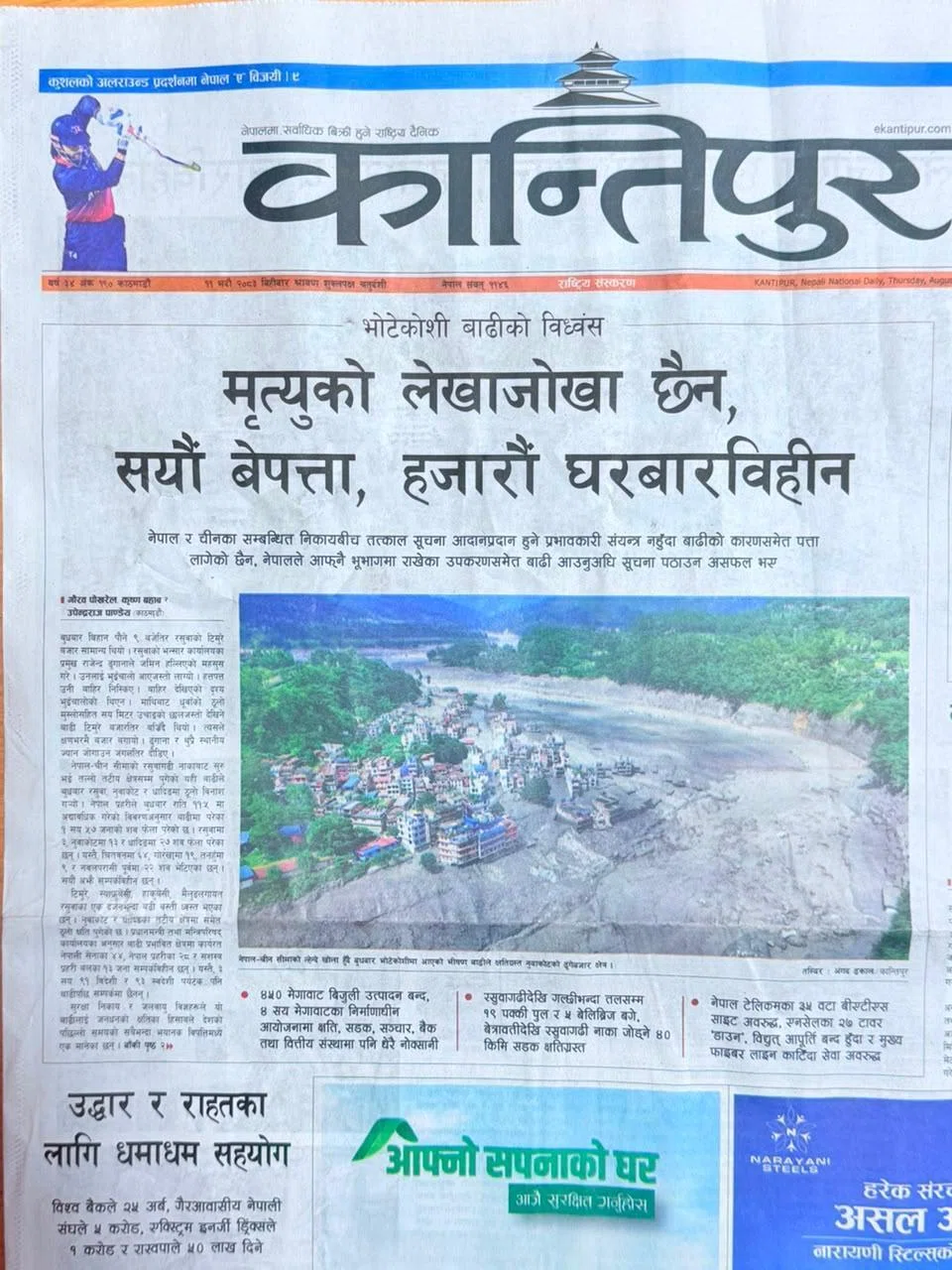
Roads (40 kilometers), bridges, power plants, and border trade with China suffered extensive damage.
It's not just about human casualties. According to the Nepal Roads Department, at least 19 bridges and approximately 40 kilometers of road along the Bhote Koshi-Trishuli route have been damaged. A subsequent government tally indicates that approximately two dozen bridges were washed away between Rasuwagadhi and Galchhi. The Rasuwagadhi Customs House, a major land trade hub with China, was also severely damaged. Hydroelectric power plants have also suffered serious damage. According to the Ministry of Energy, numerous projects, both operational and under construction, in Rasuwah and Nuwakot have been affected, with the private power generation association IPPAN reporting that approximately 753 MW of power generation projects have been impacted. The Nepalese government has estimated that damage to infrastructure, including roads, bridges, power plants, tourism facilities, and customs, could potentially exceed 200 billion Nepalese rupees . This is still an initial estimate. It may change further in the future.
Three people have died and 265 are still missing on the Chinese side.
Nepal is not the only country affected. According to China's state-run Xinhua News Agency and other sources, at least three people have died and 265 remain missing in the Gyirong border region of Shigatse city in the Tibet Autonomous Region. Roads, power, and communications were cut off, and China launched a large-scale rescue operation. Chinese authorities have deployed a large number of rescue personnel and vehicles, sent emergency supplies such as tents, warm clothing, and blankets, and are also investing disaster relief and recovery funds. President Xi Jinping has also instructed that the search and rescue of missing persons be given top priority. This disaster truly straddled the border between Nepal and China.
What Japanese companies are concerned about! Will the acceptance of Nepalese workers stop?
From here on, I would like to share some information with companies in Japan that employ Nepalese personnel, supervising organizations, registered support organizations, and everyone who is considering employing Nepalese personnel through programs such as Specified Skills, Technical Intern Training, and Training Employment. After seeing the news reports, Some people may be worried that "we won't be able to get personnel from Nepal anymore" or "the sending of personnel will stop." As of the morning of August 27, publicly available information has not been confirmed to include any government announcements suspending overseas employment procedures from Nepal to Japan, nor any nationwide dispatch of personnel to Japan. The Nepal Department of Foreign Employment's website is also operational, and even on the 26th, when the floods occurred, a new notice regarding pre-departure orientation (PDOT) was posted. The VFS visa application center for Japan has not yet posted any notice of a complete suspension of operations due to the recent floods. Rasuwagadhi, which suffered extensive damage this time, is a vital land transportation and trade route with China. On the other hand, personnel heading to Japan primarily use Tribhuvan International Airport in Kathmandu for their departures. Therefore, at this stage, This is not a disaster that will halt the entire supply of Nepalese talent, but rather a disaster that will have a significant impact on candidates and their families from specific regions, as well as on some domestic travel and procedures. That is the correct way to think about it.
However, the impact on each individual candidate is significant.
In the recruitment industry, this is a crucial point to avoid. A candidate may have family in a disaster-stricken area. They may be unable to contact their family, their home may have been swept away, they may need to return home, they may be unable to travel to Kathmandu due to road closures, they may have lost their passport or identification along with their home, or they may be unable to obtain necessary documents from their local government. There's a possibility that we'll see cases in the future where applicants can't meet the deadlines for interviews, Japanese language tests, health checkups, pre-departure training, and visa applications. Therefore, Japanese companies should be prepared if a Nepalese candidate suddenly becomes unreachable or requests to change the interview or document submission schedule. Please refrain from immediately assuming that they "lack motivation" or "declined the offer." Even if the candidate themselves is safe, their family is behind them. When we look at a "candidate" in the context of hiring foreign talent, each one has a family, a hometown, and a life story. Especially at times like these, I think it's important not to forget that.
Disasters should not be used as an opportunity to recruit talent.
There's one more thing I'd like to write about from my position in the human resources industry.
If you lose your home or job due to a disaster, "I have to work overseas."
It's possible that more people will think this way. but,
"More people will want to go to Japan because of the disaster." "It will become easier to recruit talent."
You shouldn't think that way. They take advantage of the vulnerable position of people in need and charge exorbitant fees. They rush people into signing contracts. They don't adequately explain the work involved. Both the sending side and the Japanese side need to be careful to prevent such incidents from happening. What is needed is, Accurate information. Reasonable fees. Sufficient Japanese language education. A contract understood by both the individual and their family. And career education that considers what happens even after they arrive in Japan.
What can we, as a school, do?
Instead of simply watching the news and saying, "That's terrible," we, as a school providing education in Nepal, believe we must take concrete action.
1. Confirm the safety of students, teachers, staff, and their families.
Prioritize those with family members in disaster-stricken areas such as Rasuwa, Nuwakot, Dhading, Chitwan, and Gorkha, and confirm not only the individual's situation but also that of their family.
2. We will be flexible with tuition and attendance for students affected by the disaster.
Instead of requiring students who have lost family or their homes to attend and pay as usual, we will consider tuition deferral or reduction, special treatment for absences, and free supplementary classes. 3. Acting as a bridge between students and Japanese companies.
If a student who has an interview, job offer, COE, visa, or entry into Japan is affected by a disaster, we will explain the situation to the Japanese company, supervising organization, and registered support organization with the student's consent, and provide support to prevent the situation from being dismissed simply because "they haven't contacted us."
4. Establish individual support centers for small schools.
Gather information directly from affected students and their families about their needs and provide emergency assistance based on the most pressing needs. Instead of haphazardly collecting relief supplies, cooperate with the government, local authorities, and organizations such as the Nepal Red Cross. The Nepalese Prime Minister's Office has also officially called for support for disaster relief funds. 5. We will disseminate accurate disaster information in Japanese and Nepali.
We will deliver verified information not only to Nepalese students and their families, but also to Japanese companies and Japanese individuals involved. We will also verify the date, time, location, and source of information for any videos posted on social media before sharing them. 6. We will also educate students about "helping others."
However, we will not send students directly to dangerous disaster areas. Once safety is ensured, we will consider ways in which schools can contribute, such as fundraising, organizing supplies, disseminating information, and supporting students affected by the disaster.







 EN
EN
 JA
JA