
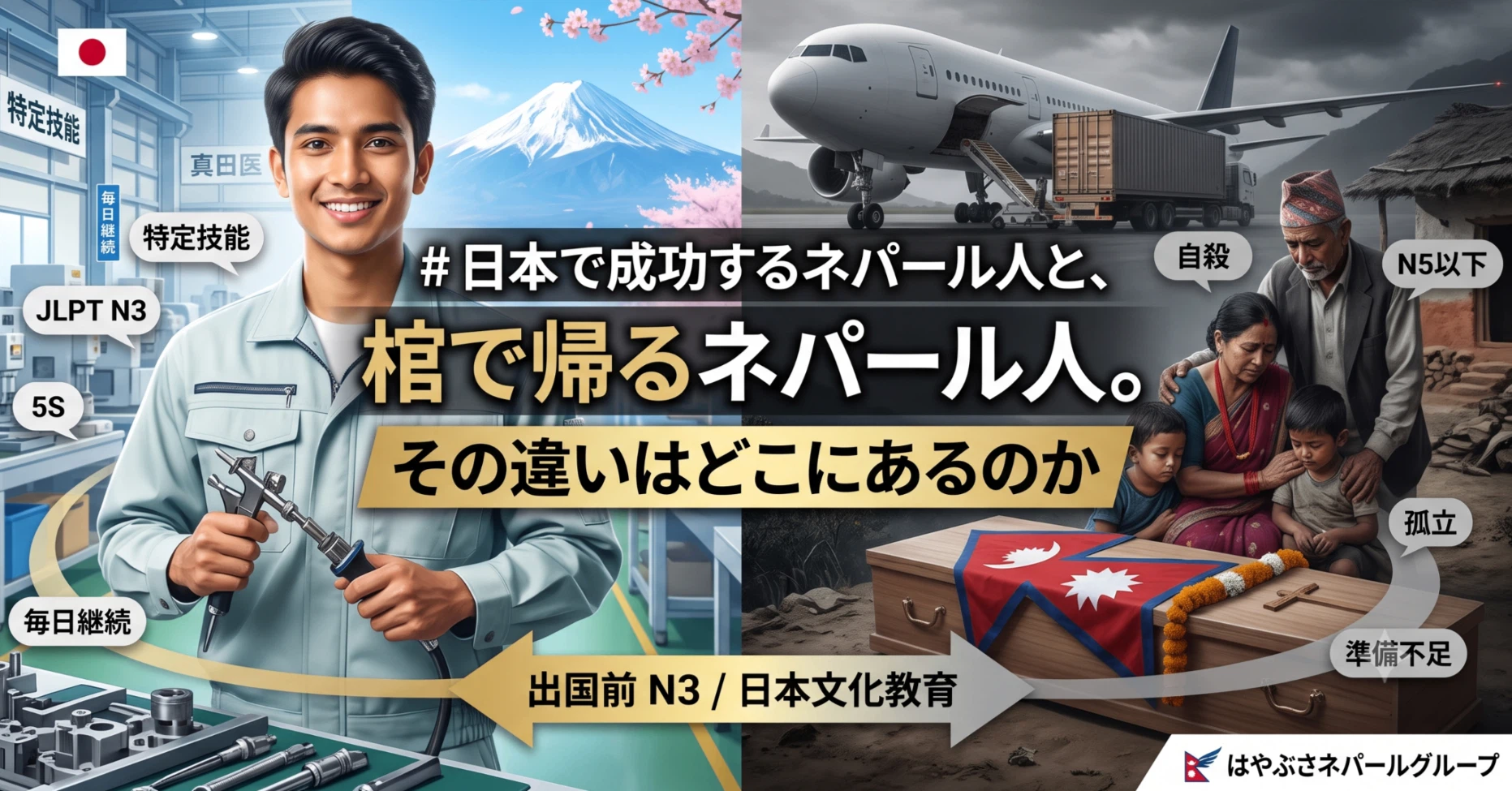
Approximately 2,300 people leave Nepal every day in search of work.
And on average, five people die overseas and return home in coffins every day .
They are young people from the same country, of the same generation. One succeeds and supports his family, while the other returns in a coffin. What creates this difference? Is it luck? Is it their own effort? Is it their circumstances? Is it the country where they worked?
As someone involved in sending organizations and Japanese language education on the ground, I can say with certainty that the vast majority of the differences are determined "before departure." Today, let me explain this with the help of data.
Background knowledge: Nepal in terms of population
With a population of 29.16 million and a median age of 25, it may be the last country to supply human resources.
Japan's working-age population is decreasing by several hundred thousand people every year.
On the other hand, the view from here in Kathmandu is the complete opposite. Population 29.16 million. Median age approximately 25 years old. Working-age people (15-59 years old) make up 61.96% of the total population. This is the picture of the country as shown by the 2021 Census of the Central Bureau of Statistics of Nepal.
And every year, approximately 830,000 people obtain work permits and leave the country.
Where are those young people now, what's happening there, and why do I confidently say, "Japan is next"? Let's analyze this using publicly available data from the Nepalese government.
Nepal is in the midst of a "demographic dividend."
First, let's look at the demographic structure of this country.
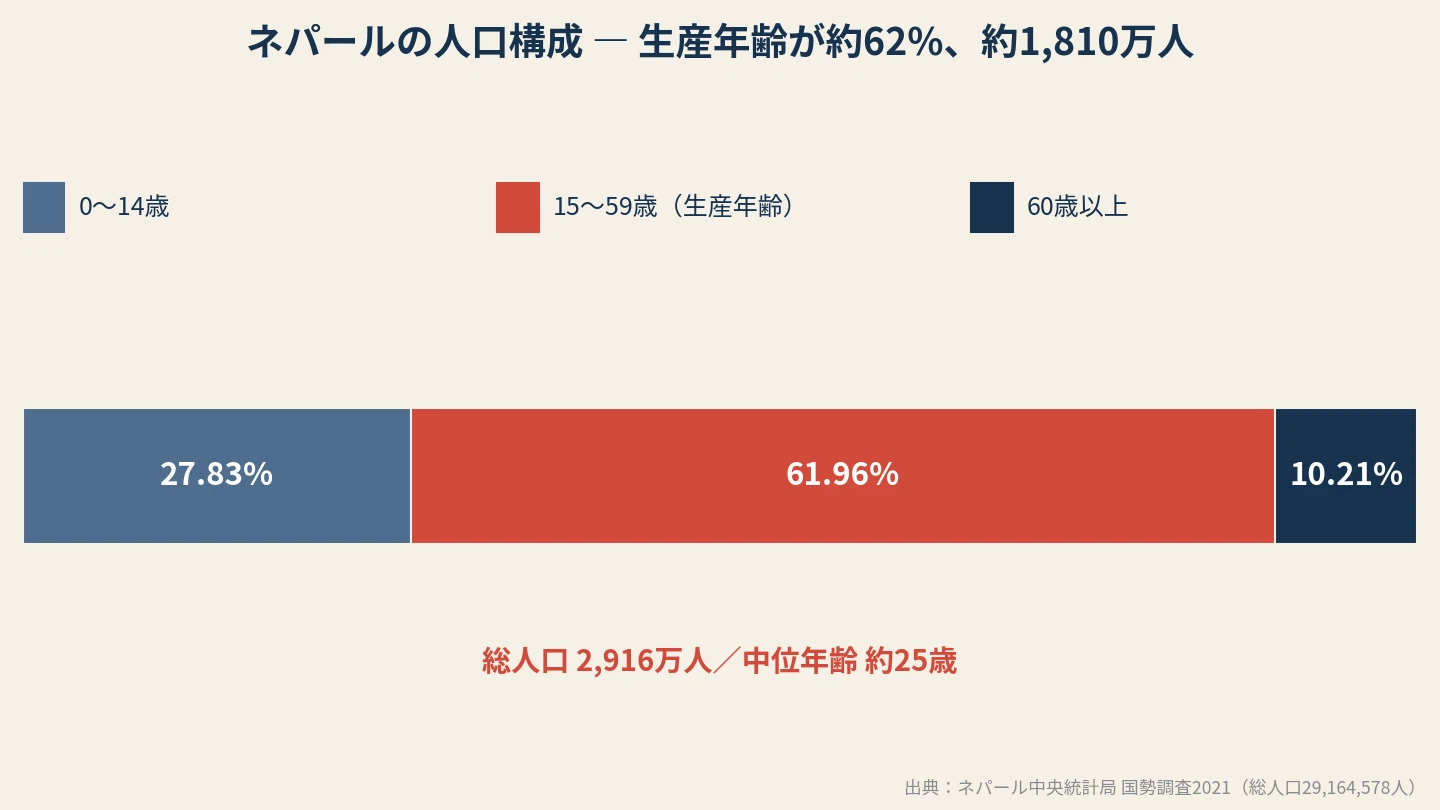
61.96% of the population is of working age (15-59 years old), which is approximately 18.1 million people.
According to the 2021 census (total population 29,164,578), 27.83% are aged 0-14, 61.96% are of working age (15-59 years old), or approximately 18.1 million people , and only 10.21% are 60 years or older. The number of "young people" (16-40 years old) as defined by Nepal's National Youth Policy is 12,398,017, or 42.5% of the total population.
It's a mirror image of Japan. Nepal is struggling to find what Japan is losing.
Moreover, the literacy rate has risen to 76.2%, and the urban population has exceeded 66% (2021 Census). "Educated young people are flooding the cities with no jobs available within the country ." This is the current situation in Nepal. The minimum wage in the country is 17,300 rupees per month, or about 18,400 yen. That's why they're leaving. Adding to this is the rising cost of living in recent years. It's becoming increasingly difficult to live in the capital region. That's why young people are desperate to go abroad to work.
830,000 people leave the country every year. Their destinations are the problem.
According to the Nepal Department of Foreign Employment (DoFE), approximately 839,266 people have work permits for the 2024/25 fiscal year. More than 10% of the population, or about 3.01 million people, are already working abroad (of which about 1.09 million are in India. Nepal Government "Labor Migration Report 2024").
Where are you going?
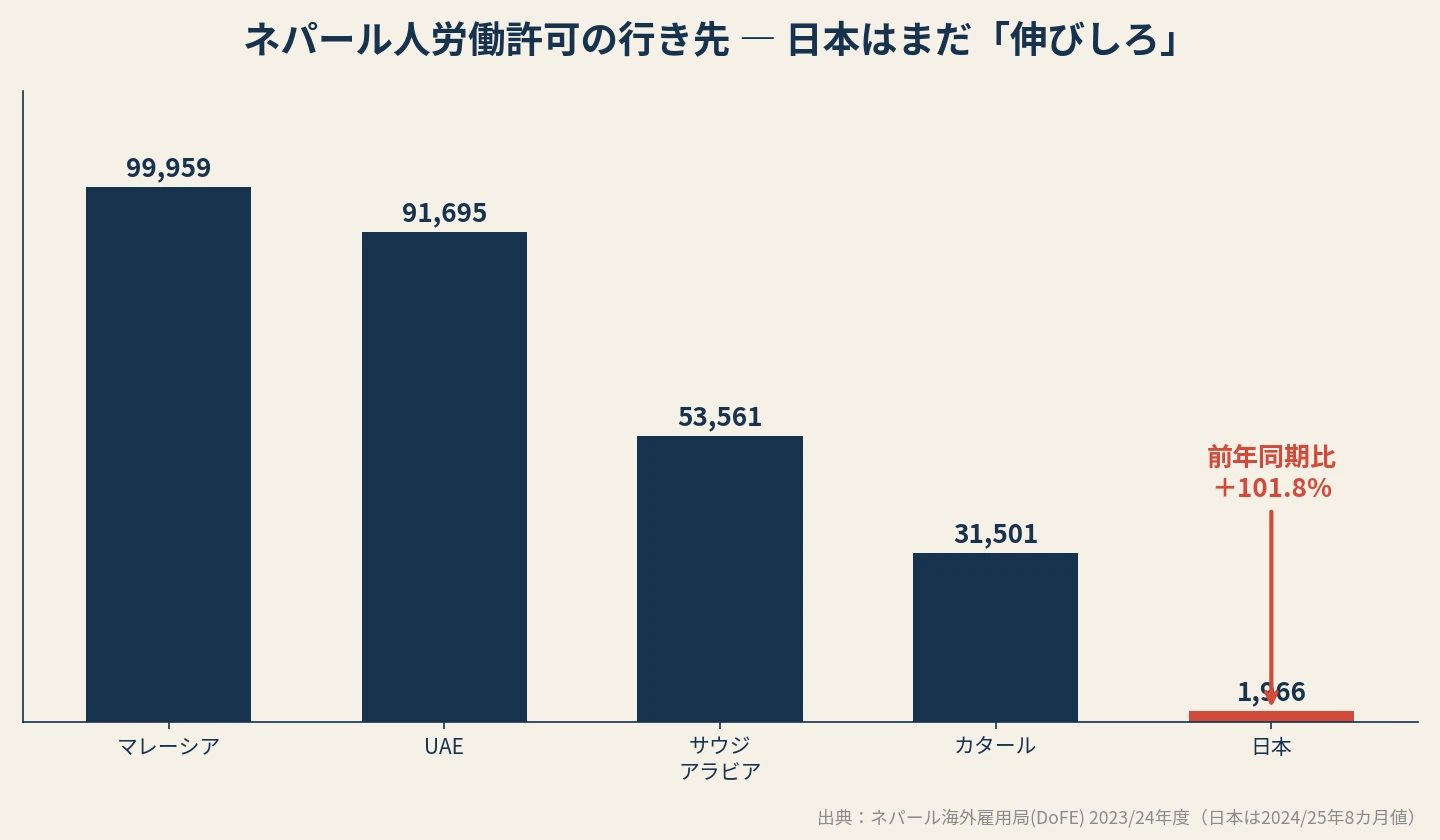
The shipment to Japan will begin soon.
Malaysia: 99,959, UAE: 91,695, Saudi Arabia: 53,561, Qatar: 31,501 (DoFE 2023/24). Furthermore, 81.3% of new work permits are concentrated in the Gulf states plus Malaysia (Nepal Labor Migrant Report 2024).
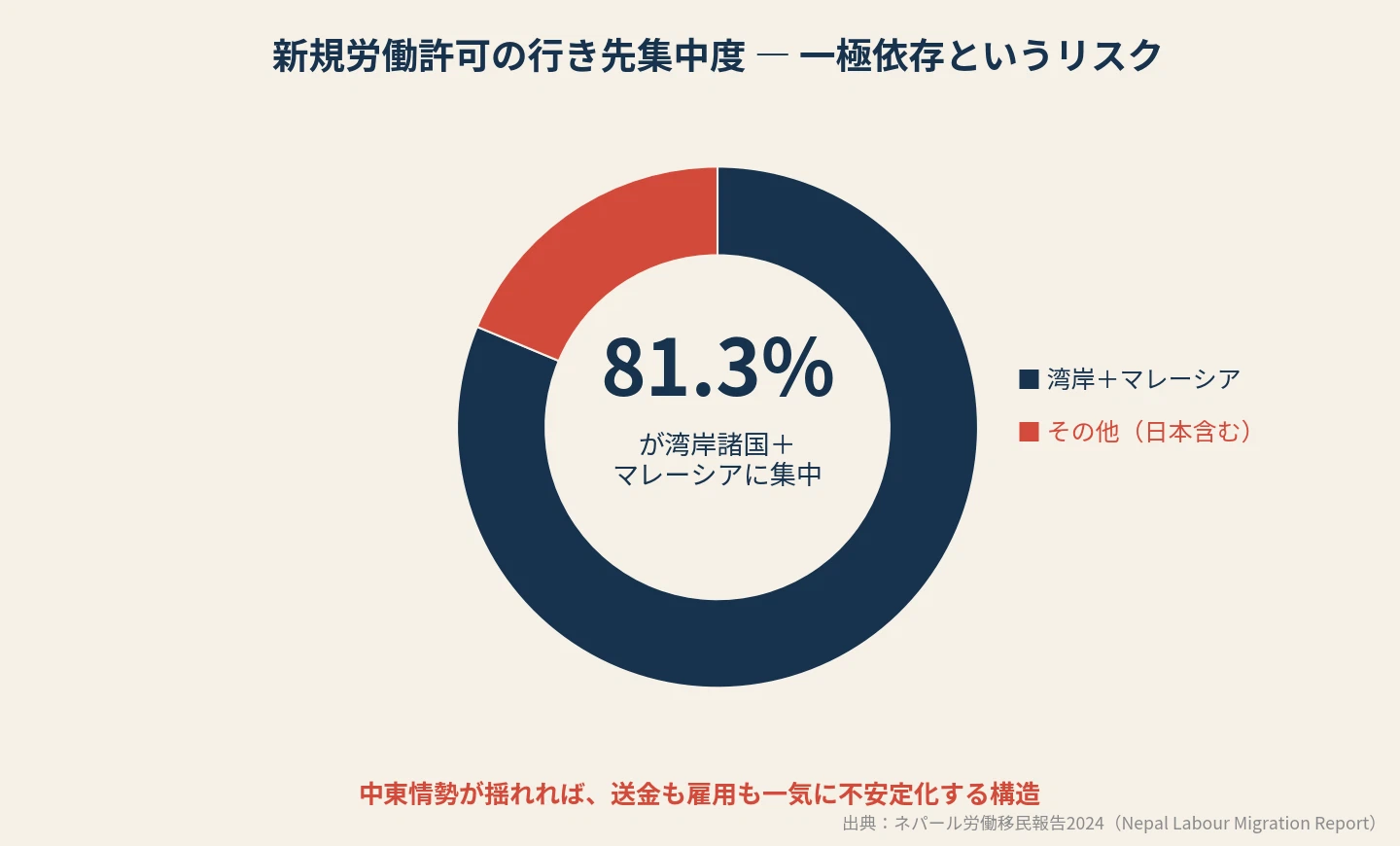
Up until now, the sending countries have mostly been the Gulf region plus Malaysia.
In contrast, Japan has only 1,966 workers on a work permit basis (DoFE, 2024/25). However, this represents a 101.8% increase compared to the same period last year, making it the fastest-growing destination.
In a country where 830,000 people are leaving, Japan still has only 2,000. I think the actual number is higher, but even so, this difference directly reflects the growth potential of Japanese companies.
CONTINUE READING - https://note.com/umechyansensei/n/nc75ca74cfb1a?from=notice







 EN
EN
 JA
JA