To the students who wrote "I want to go to Japan soon" on their wish strips! The real reason why Tanabata is celebrated in Kathmandu!
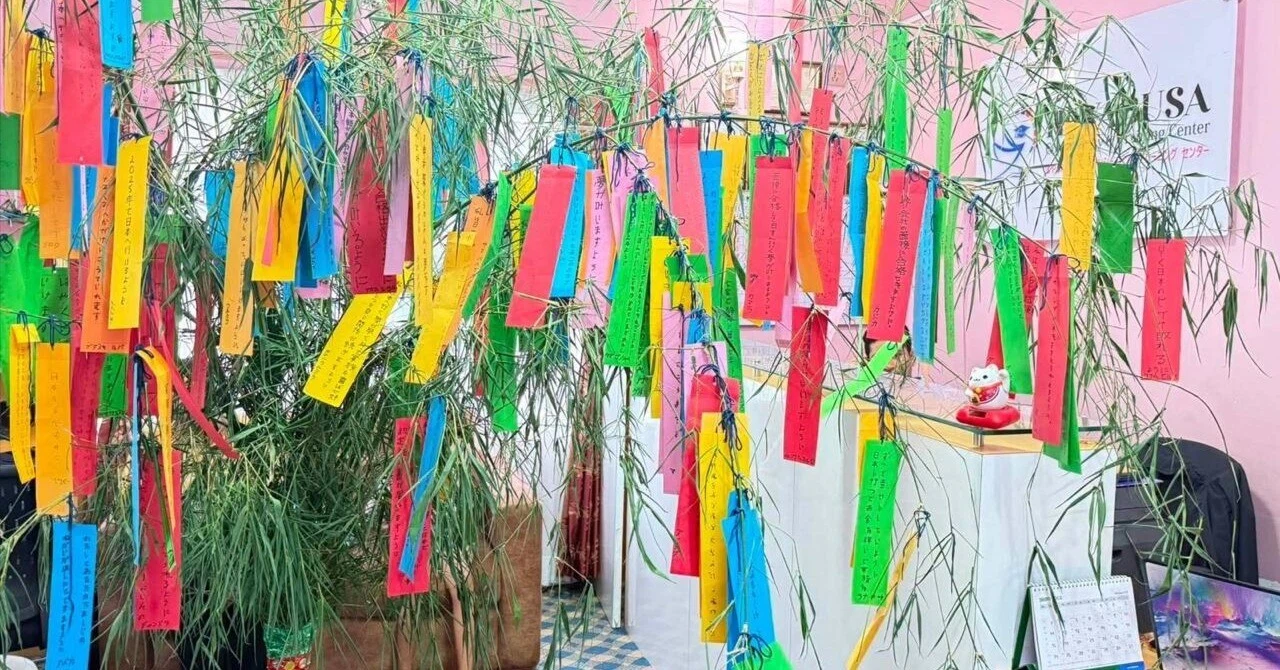
This year's Tanabata.
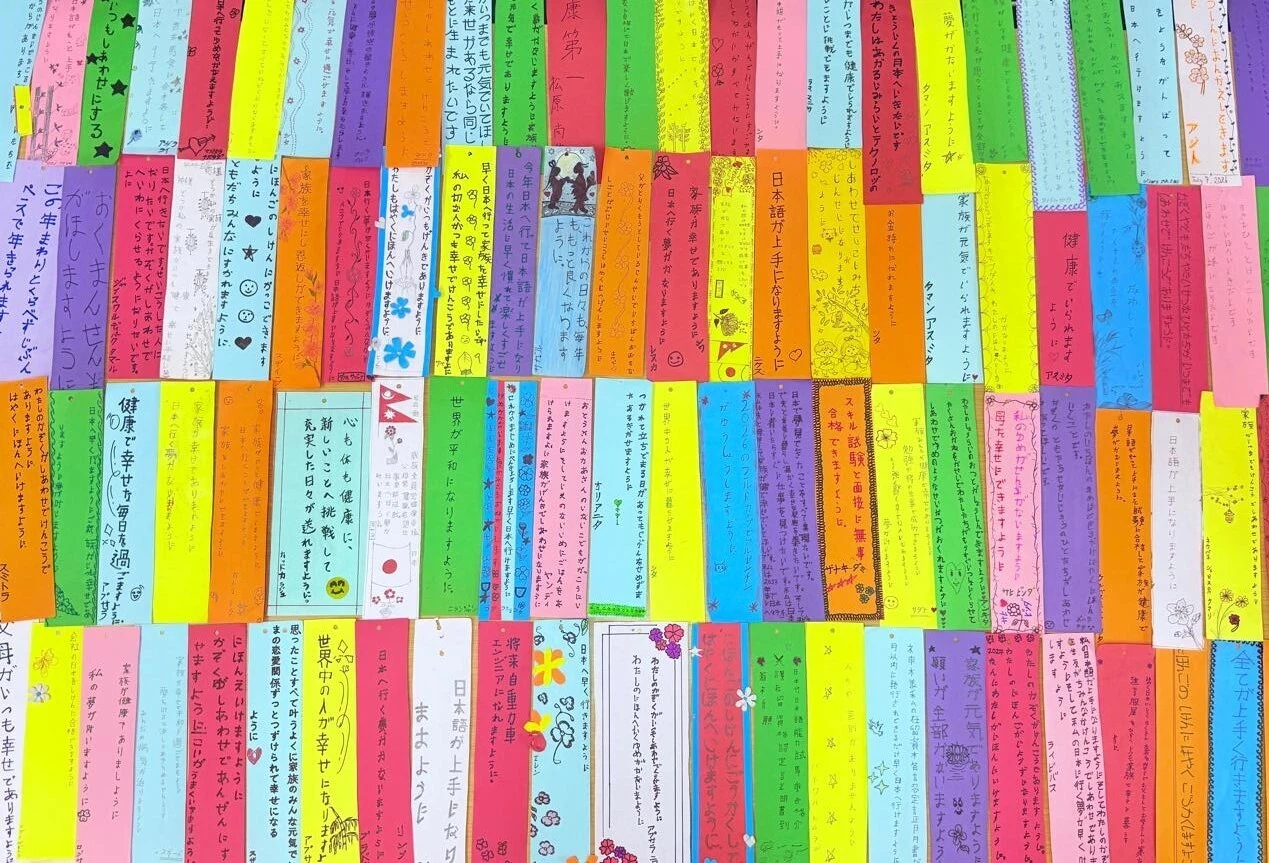
Hanging from a bamboo branch at Hayabusa Japanese Language School was this wish written on a strip of paper: "I want to go to Japan soon ." The handwriting was beautiful, and the hiragana was written perfectly. However, there was one problem. The student who wrote it had missed three Japanese classes that week. The wish was hanging on the bamboo branch, but the student wasn't there. A friend had hung it up for them. And next to it was another wish: "I want to become rich soon."
I stood there for a while, arms crossed, unable to move, in front of those two wish strips. And I thought: What should I say to these two? It would be easy to get angry and say, "Don't skip school." But that wouldn't change anything. Their "soon" isn't wrong. Their families are waiting. They don't have much time. Their anxiety is real. So instead of getting angry, I decided to write this article. About the one and only way to truly make your "soon" wish come true.
There are many strips of paper with the message, "I want to go to Japan soon!"
This article will discuss the following:
What is Tanabata? (History, origins, regional variations, and even the customs of cleaning up afterward)
The way of sending bamboo and paper strips, known only to ancient Japanese people.
A true story of hilarious and slightly tearful poems written by Hayabusa students.
That Nepalese festival that looks just like Tanabata
Now, to the main point: "I want to go to Japan as soon as possible." Why is taking the N3 exam the quickest way to achieve this?
If you want to get rich quickly, why is understanding Japanese and its culture the shortest path?
If you're a student who's thinking, "I want to go to Japan soon!", then please read this article to the end.
Chapter 1: On the word "quickly" I also like students who say, "I want to go to Japan quickly." I'm serious. Students who are anxious to go to Japan quickly tend to study much better than students who just go to school aimlessly and let time pass by. That's because there's a reason for it .
My mother needs medical expenses.
I want my younger brother to go to university.
My father has debts.
I want to rebuild the village houses.
If I don't earn money now, my family won't survive.
At 17 or 18 years old, they bear the responsibility for their family's future. That's the reality for students in Nepal. That's why the word "quickly" carries so much weight. The problem is the direction of that "quickly . "
In Japan, there is a proverb that goes like this:
"Haste makes waste."
If you're in a hurry, take the long way around. Every student who hears this for the first time makes this face: "Teacher, that's a contradiction." But it 's not a contradiction. This is one of the most practical lessons in Japan . In the past, when crossing Lake Biwa, a large lake, going straight by boat was the fastest. However, there was a risk of the boat capsizing due to strong gusts of wind blowing down from Mount Hiei. Therefore, walking on land, even if it was a longer route , was ultimately faster and more reliable. In other words, it's like this: "There are times when a route that seems slower at first glance actually gets you there faster." And going to Japan is exactly that. I spent 20 years in Japan. I worked in hotels, in the human resources industry, and saw countless Nepalese people. In those 20 years, I have hardly seen anyone who "went to Japan early without preparation" and succeeded. On the contrary, "those who prepared by taking what seemed like a roundabout route" are the ones who end up making money the fastest. This is not a matter of willpower. It's about numbers . I will show you all those numbers in Chapters 12 and 13. But before that, let me first talk about Tanabata. That's because the Tanabata festival itself is a story that warns against being "too hasty."
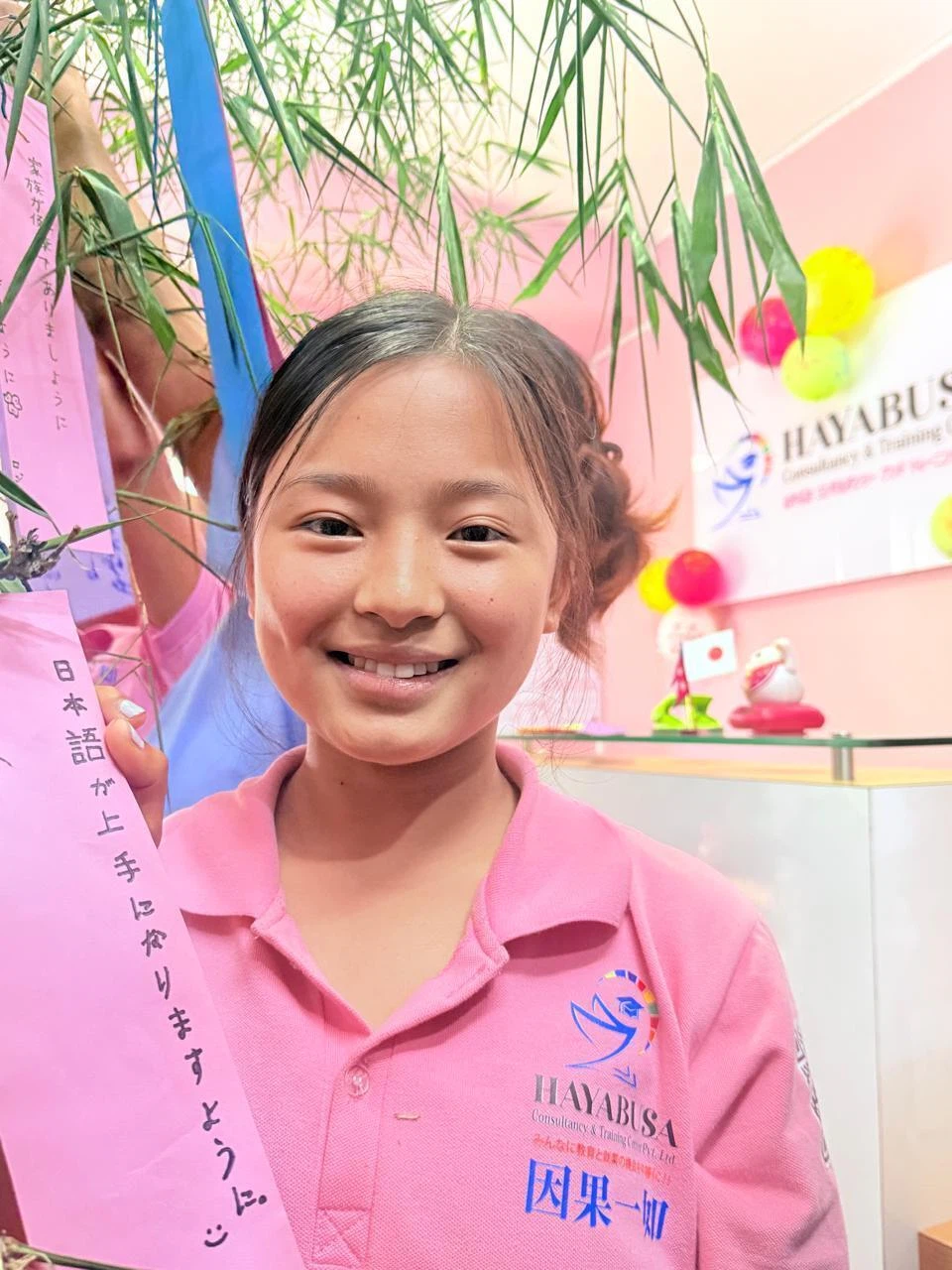
A photo taken after I hung up the paper strips I wrote on!
Chapter 2: What exactly is a "festival"?
Before we get into the story of Tanabata, just one thing. When I ask students studying Japanese, "What is a festival?", they usually reply something like this:
"It's a fun event!" "Everyone hangs up strips of paper, wears kimonos, takes pictures! Makes TikTok videos!" That's half right and half wrong. The kanji for "festival" originally meant "to offer to the gods ." The top part is meat, next to it is a hand, and below is an altar. In other words, it's the shape of offering meat with hands .








 EN
EN
 JA
JA