
Japan Interview Preparation Guide
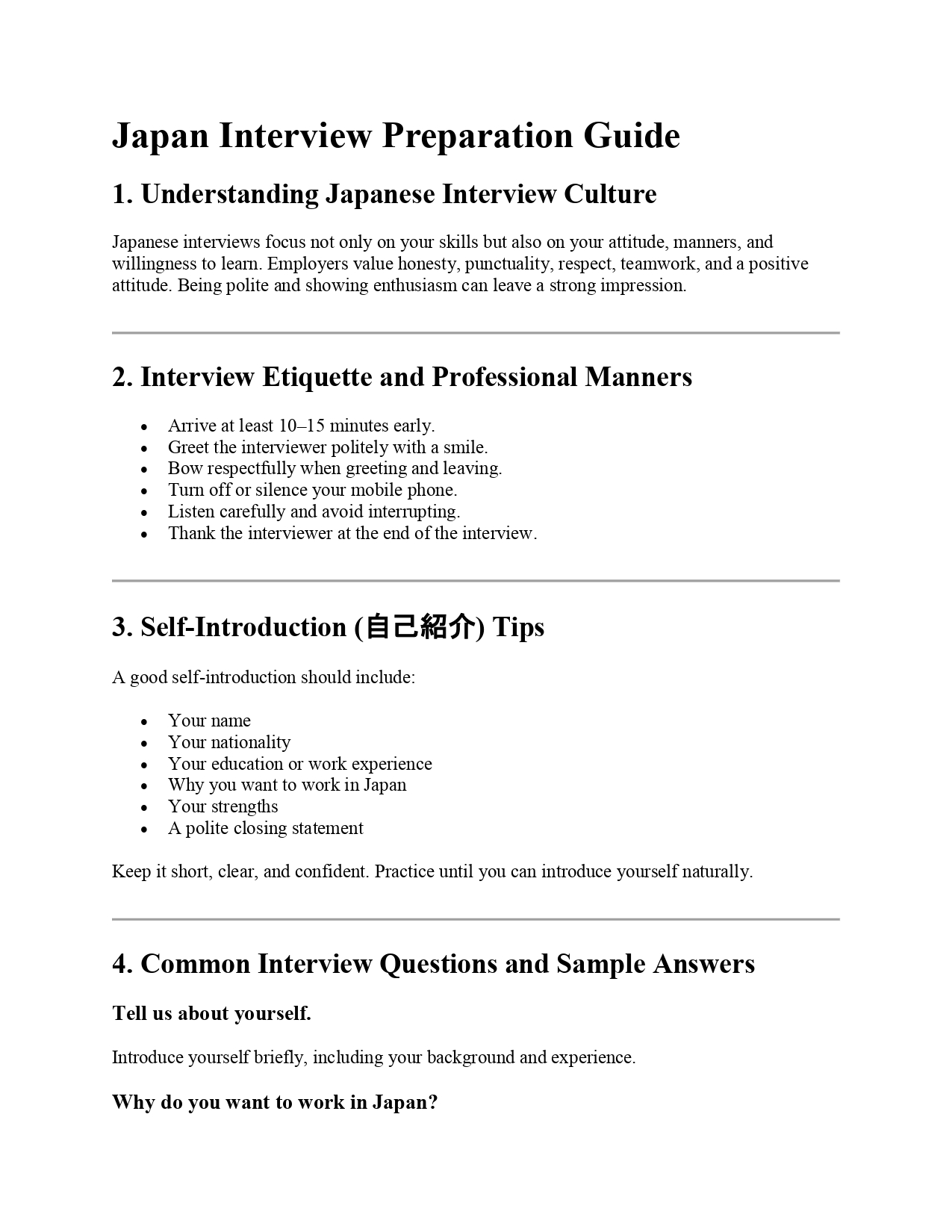
Understanding Japanese Interview Culture A job interview is the most crucial step in securing employment in Japan. Japanese employers evaluate candidates not only on their technical qualifications and work experience, but heavily on their personal character, business etiquette, communication effort, ability to follow rules, and cultural adaptability. Whether you are preparing for your first overseas interview or applying for a Specified Skilled Worker (SSW) or Technical Intern Training Program (TITP) position, this guide will help you master Japanese interview culture, craft strong responses, and present yourself with confidence.
Interview Etiquette and Professional Manners Japanese recruiters focus on four primary evaluation criteria: First Impression, Japanese Communication Effort, Motivation, and Teamwork. When entering the room, knock on the door 3 times clearly and say "Shitsurei shimasu". Wait for the interviewer to respond with "Douzo", open the door, step inside, and close it quietly using both hands. Turn toward the interviewer, greet them politely, and bow at a 30-degree angle. Walk to the chair, wait until told "Okake kudasai", say "Shitsurei shimasu", and sit down with straight posture.
Self-Introduction (Jiko Shokai) Tips A clear, 1-to-2-minute self-introduction sets a positive tone for the rest of the interview. Begin with your greeting and name, followed by a brief summary of your relevant work experience or technical training background. Highlight 1 or 2 key personal strengths such as diligence, punctuality, or fast learning. Conclude by expressing your enthusiasm to contribute to the company and saying "Yoroshiku onegai shimasu."
Common Interview Questions and Sample Answers
Why do you want to work in Japan? "I want to gain hands-on experience with Japan's advanced technology and work standards. I admire the disciplined work culture and wish to build a long-term career while contributing to your company."
What are your main strengths and weaknesses? Highlight a strength relevant to the job. For weaknesses, always mention the active steps you are taking to overcome them.
How will you handle challenges in Japan? Emphasize that you will practice Ho-Ren-So (Report, Inform, Consult) by seeking advice from your supervisors and colleagues rather than handling issues alone.
Asking Questions (Reverse Interview) When the interviewer asks if you have questions, asking a thoughtful question demonstrates genuine interest. Good examples include: "Are there any specific technical terms or Japanese vocabulary I should study before joining?" or "What traits do your most successful foreign employees share?"
Interview Preparation Checklist
Test your camera, microphone, lighting, and internet connection in advance for online interviews.
Double-check your grooming, suit, hair, and overall presentation.
Practice speaking your self-introduction out loud with clear pronunciation.
Join the meeting or arrive at the venue at least 20 minutes prior to the scheduled time.
You can request a free download via the form below.
Please fill out the form below to request this material. Our team will send it to your email within 24 hours.







 EN
EN
 JA
JA